Bocas del Toro
Panama 🇵🇦

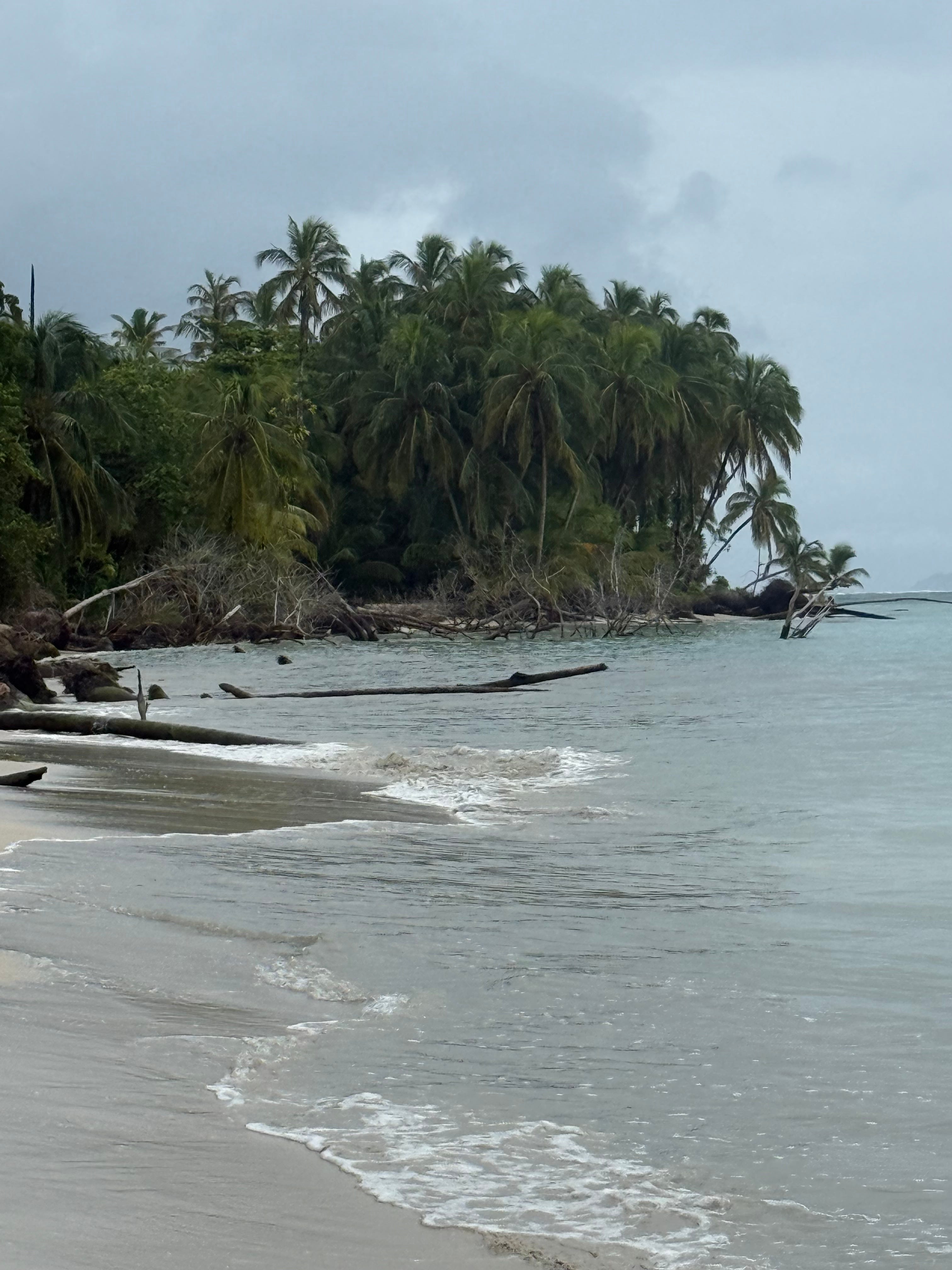
“Hop on the scales please madam”. Oh that’s right, this is a tiny plane I’m about to board. Sansa air specializes in short regional flights that connect San Jose with beach, rainforest, and remote destinations that can otherwise require long drives. The flight we take seats eight passengers plus the pilot and copilot, very small, one engine only!
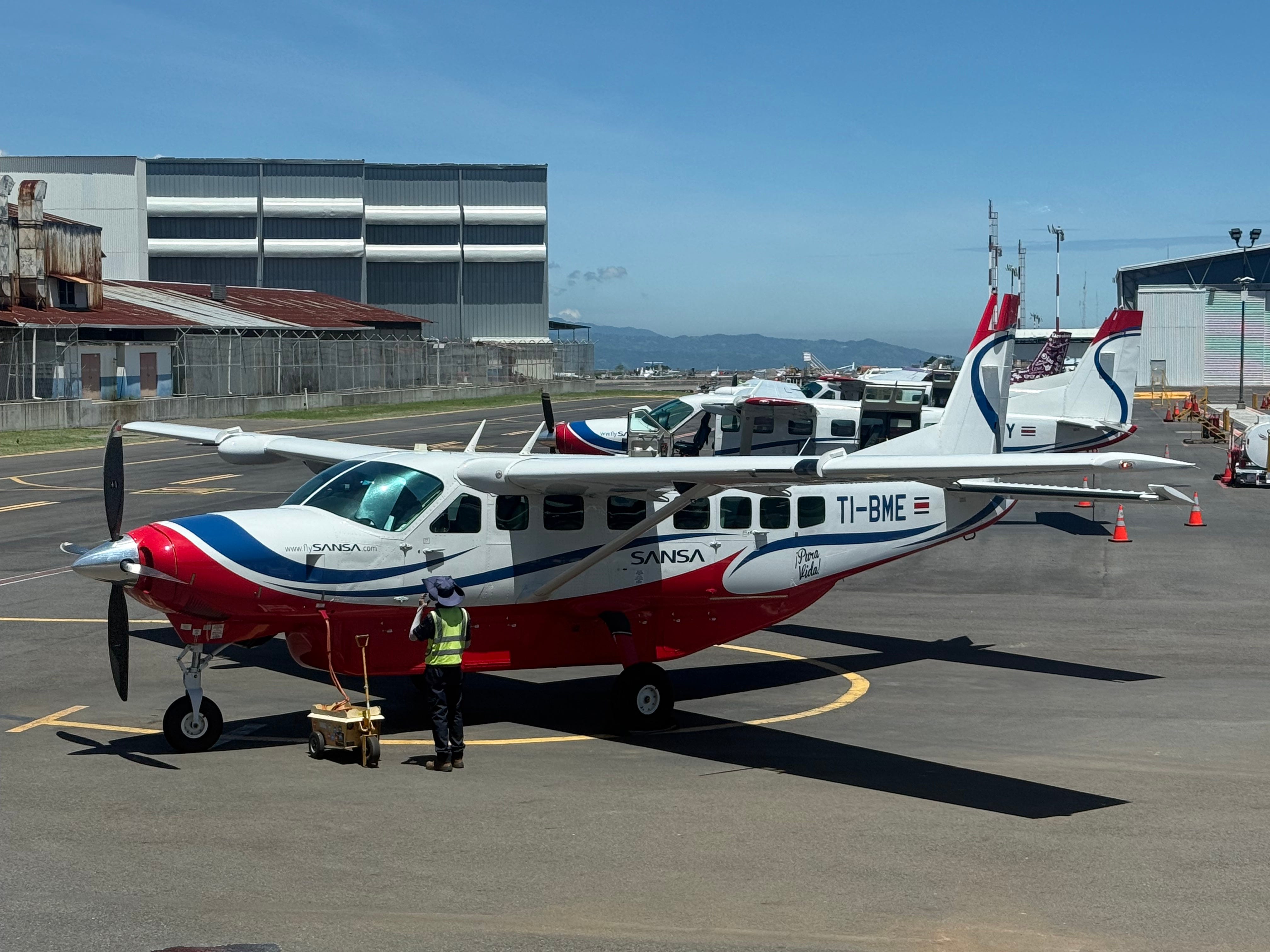
Bocas del Toro is a tropical archipelago on Panama’s Caribbean coast, near the border with Costa Rica. It’s one of Panama’s most popular beach and ecotourism destinations, known for turquoise water, coral reefs, surfing, rainforest wildlife, and a vibrant Afro-Caribbean culture. The archipelago consists of several main islands and hundreds of smaller cays and islets. Bocas town is the destination we are headed to. Inhabited by indigenous people for centuries, and in his fourth voyage to the area, Christopher Columbus landed here in the early 1500s. The name of Bocas del Toro exact origin is debated, perhaps it’s the roaring waves sounding like a bulls roar, or the rock shaped like a bulls head, or the local indigenous leaders name - Bokas Toro, however regardless of the origin it’s a spectacular spot. Such a fabulous spot to complete a Latin Americas whirlwind tour.
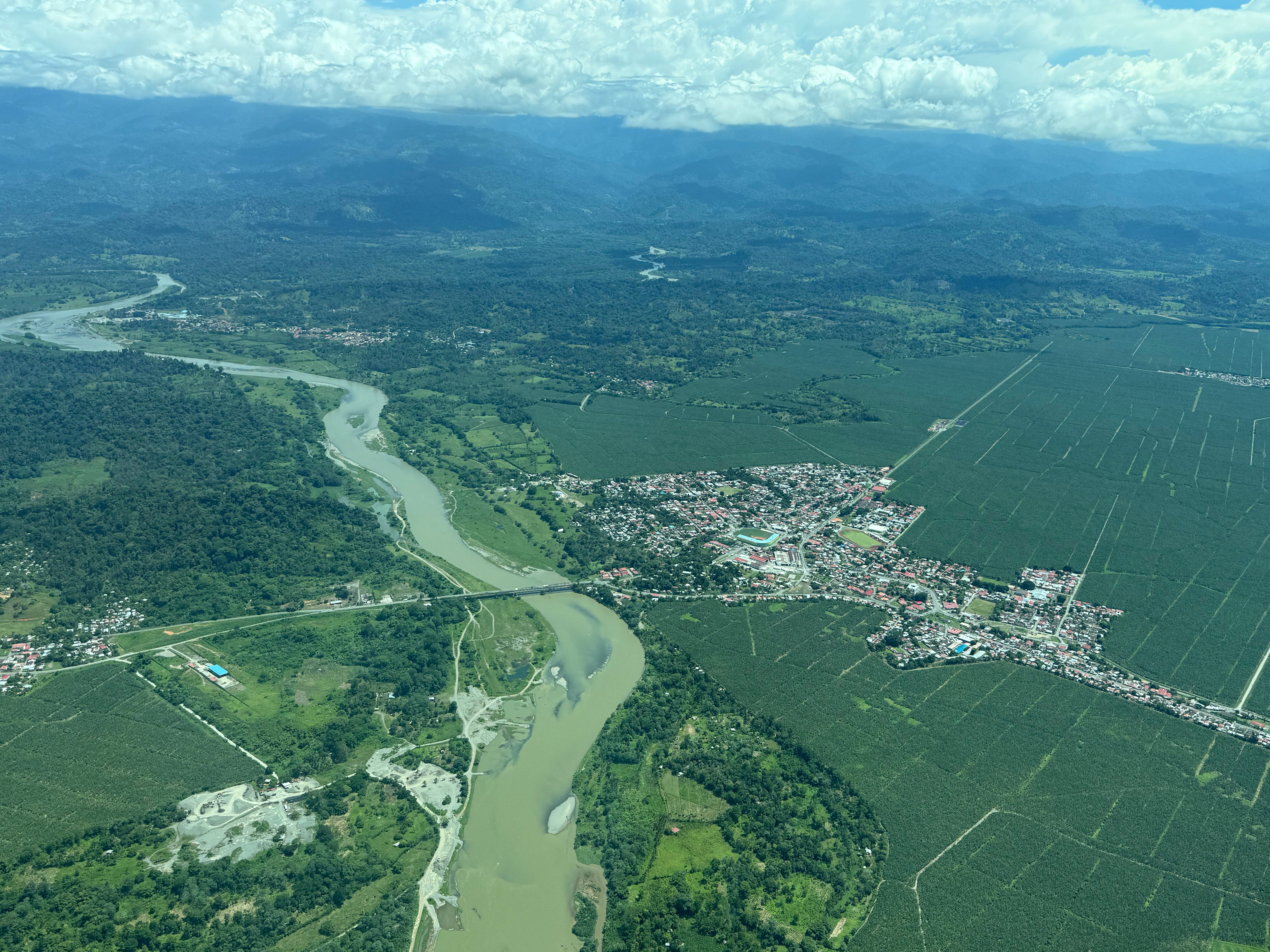
The flight has an interesting start as we zigzag down the runway, then lift off and get a spectacular aerial view of San Jose. Almost immediately, the landscape drops away beneath you. Clusters of red-tiled roofs, shopping centers, and neighborhoods of Alajuela and western San José spread across the valley like a patchwork quilt. Roads thread through the city, while small rivers cut green ribbons through the urban area. As the plane climbs, the city gives way to shades of emerald. Layers of mountains rise in every direction. On this clear morning, I catch sight of the volcanic peaks north of the valley, including Poás Volcano in the distance. Within a few minutes, the city shrinks into a gray-and-red mosaic surrounded by deep green mountains. Clouds gather around the peaks, creating the feeling that the aircraft is climbing out of a bowl and into the sky. The last view before entering the cloud layer is a stunning contrast of dense urban neighbourhoods, coffee country, rainforest-covered slopes, and volcanic highlands—all packed into a remarkably small area.
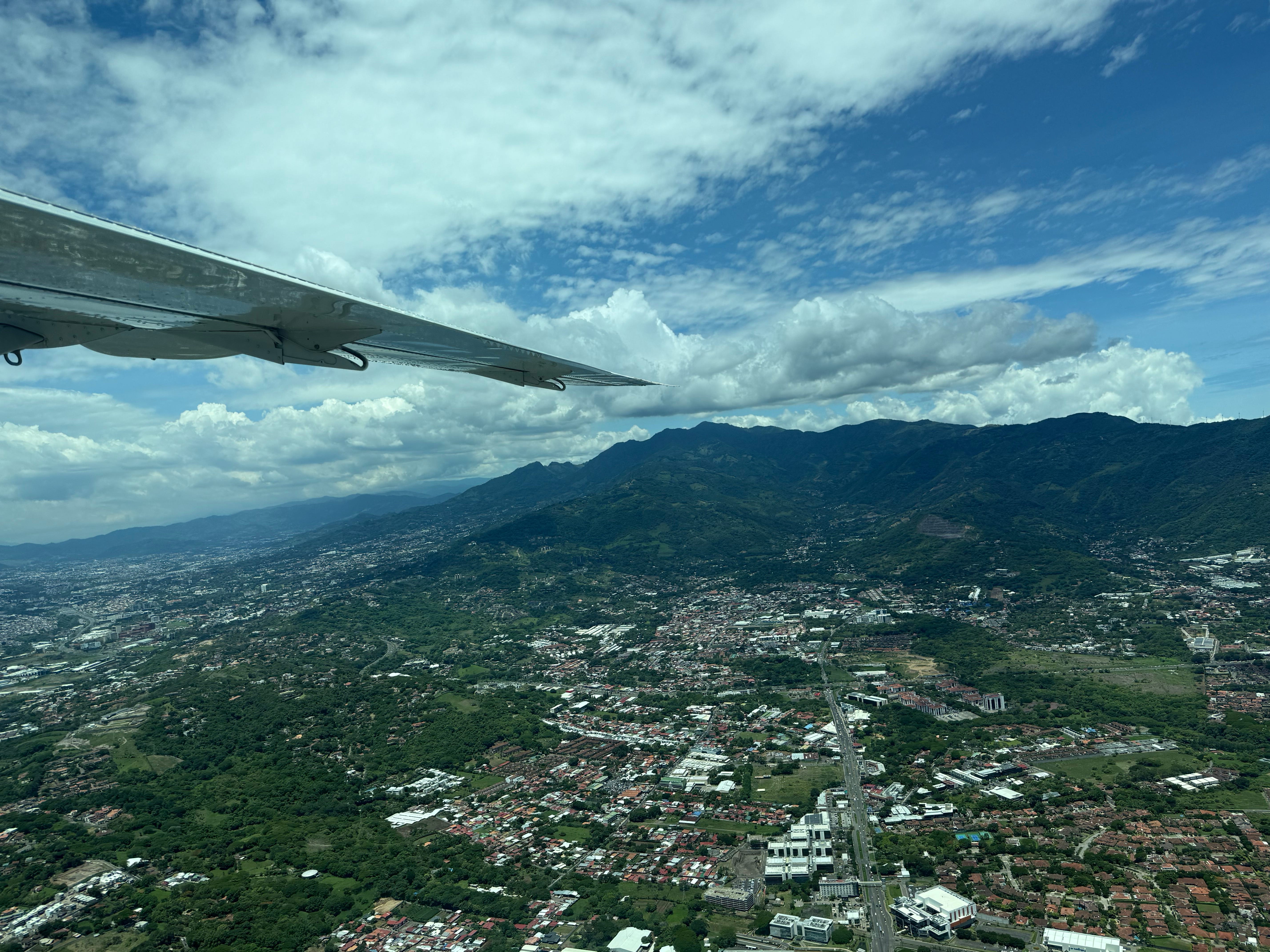
As the aircraft heads southeast toward Panama, the landscape becomes increasingly wild. Below are the rugged mountains of the Talamanca Mountain Range, one of the most remote regions in Central America. From the air, the mountains appear as endless folds of deep green, cut by rivers and hidden valleys. There are very few roads, and much of the area is covered by protected rainforest. Approaching the Caribbean side of Panama, the mountains gradually descend toward lowland rainforest. The color palette shifts from dark mountain greens to brighter tropical greens. Rivers begin to meander across flatter land, and eventually the Caribbean Sea comes into view—a brilliant blue-green expanse contrasting sharply with the forest.
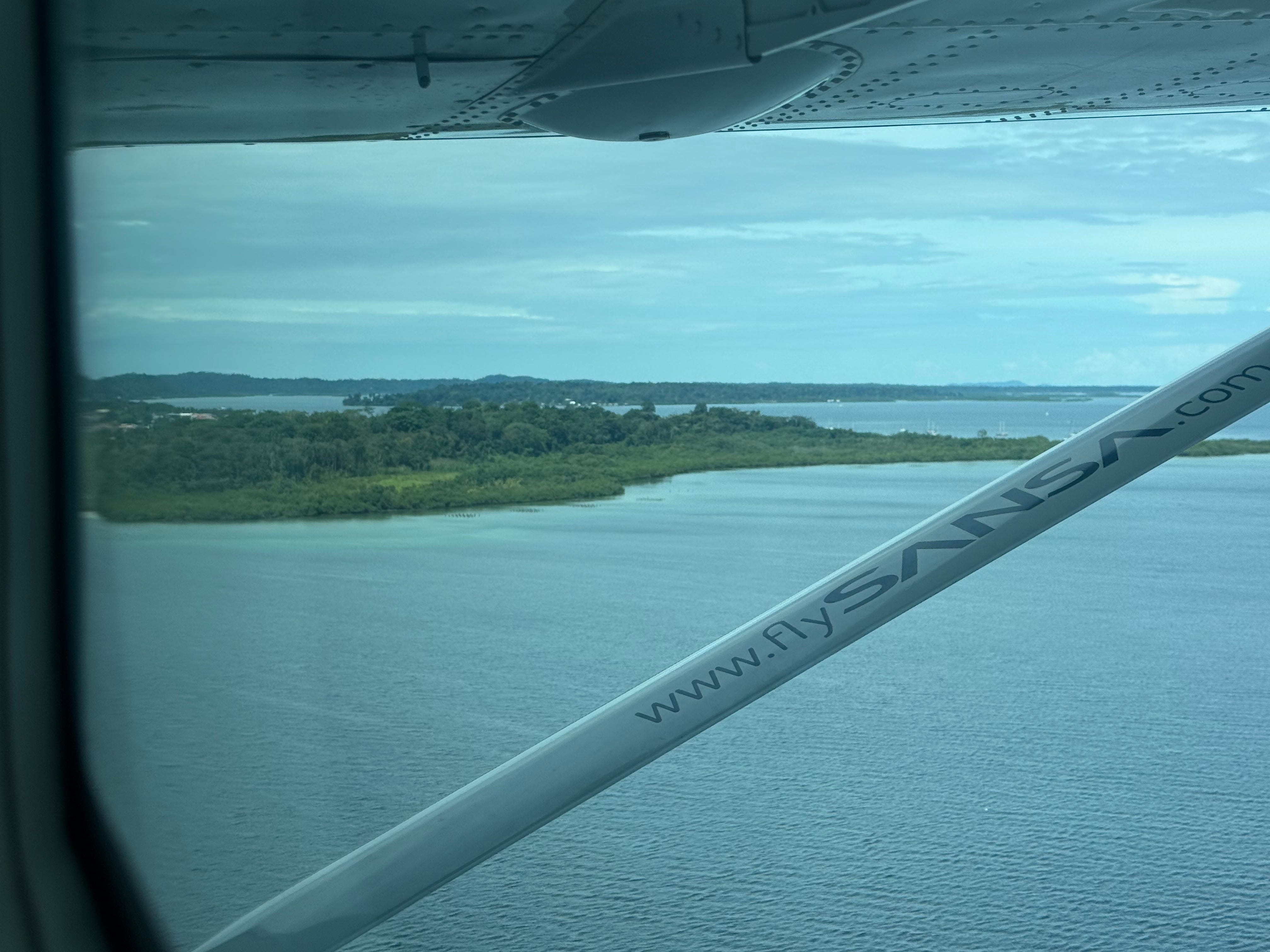
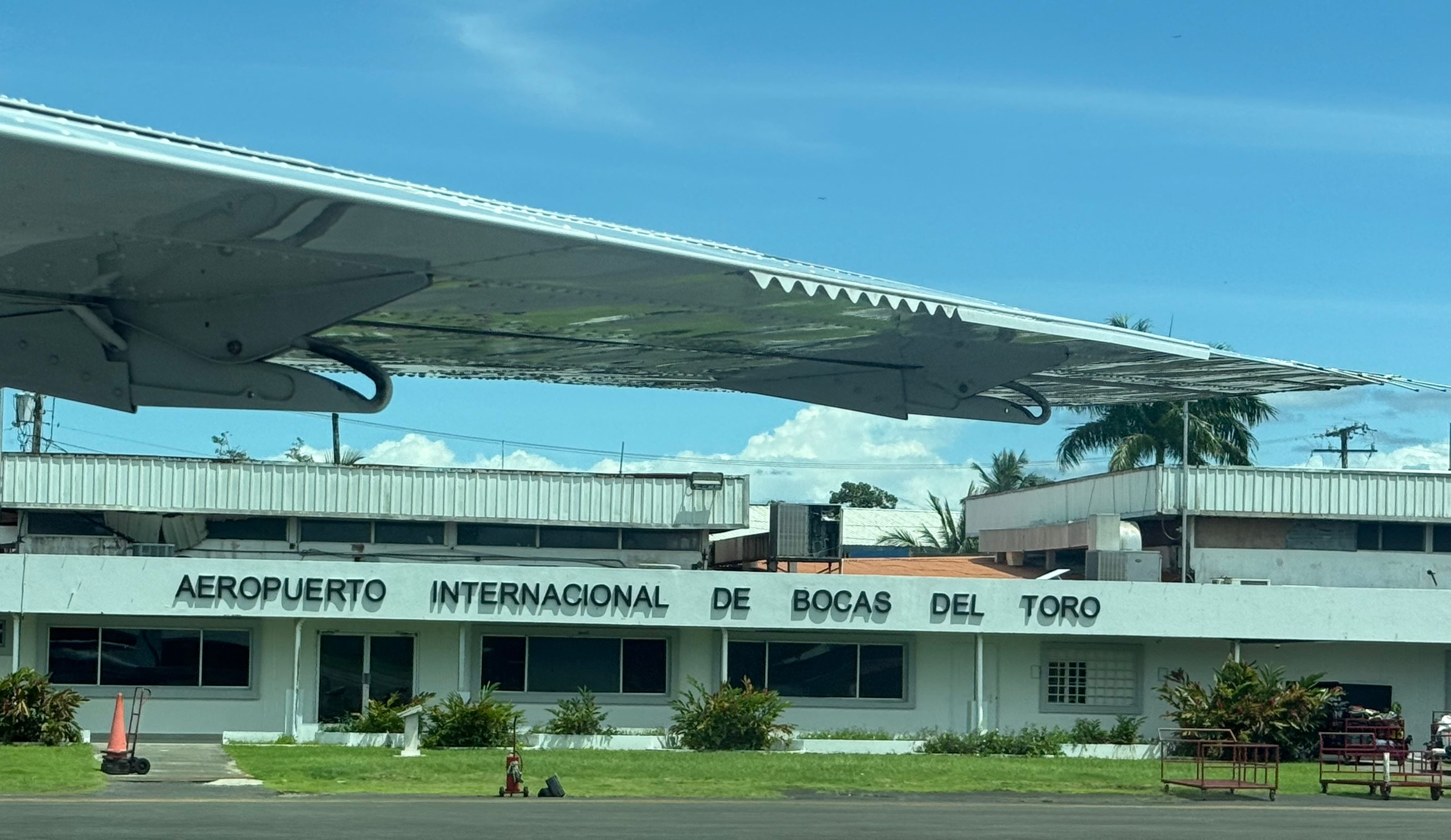
The final approach into Bocas del Toro is the highlight. The aircraft descends over turquoise water dotted with islands, mangrove-fringed shores, coral reefs, and small boats. You can make out the islands of the archipelago, including Isla Colón, where the airport is located. The water changes colour from deep blue to aquamarine over shallow reefs and sandbars. During the last few minutes, it feels as though the plane is landing directly onto the sea. The runway on Isla Colón appears between palms and tropical vegetation, with the Caribbean visible on both sides. Compared with the mountainous departure from San José, the arrival feels distinctly tropical and maritime—a transition from cool highlands to island Caribbean in less than an hour. Bliss!
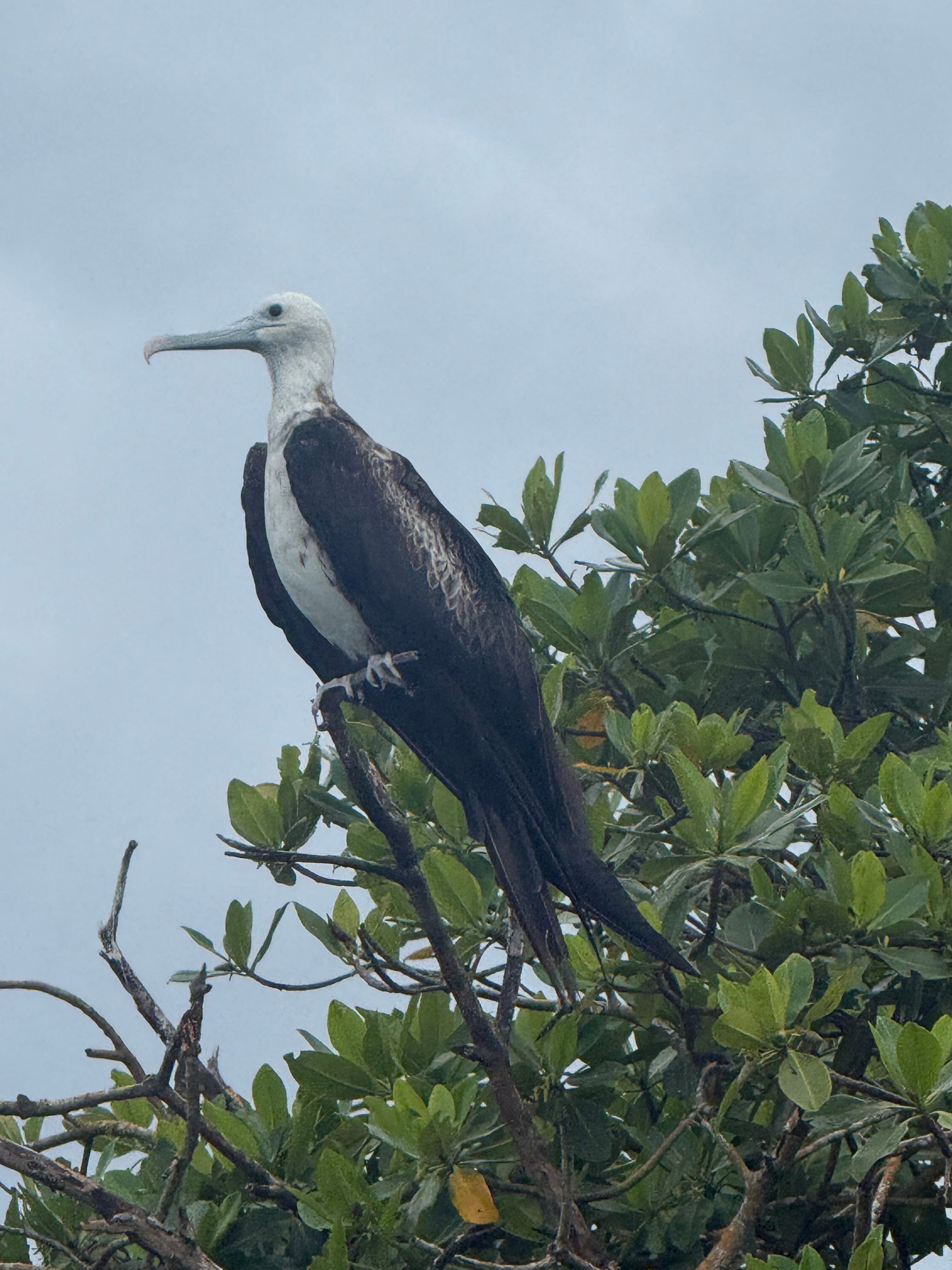
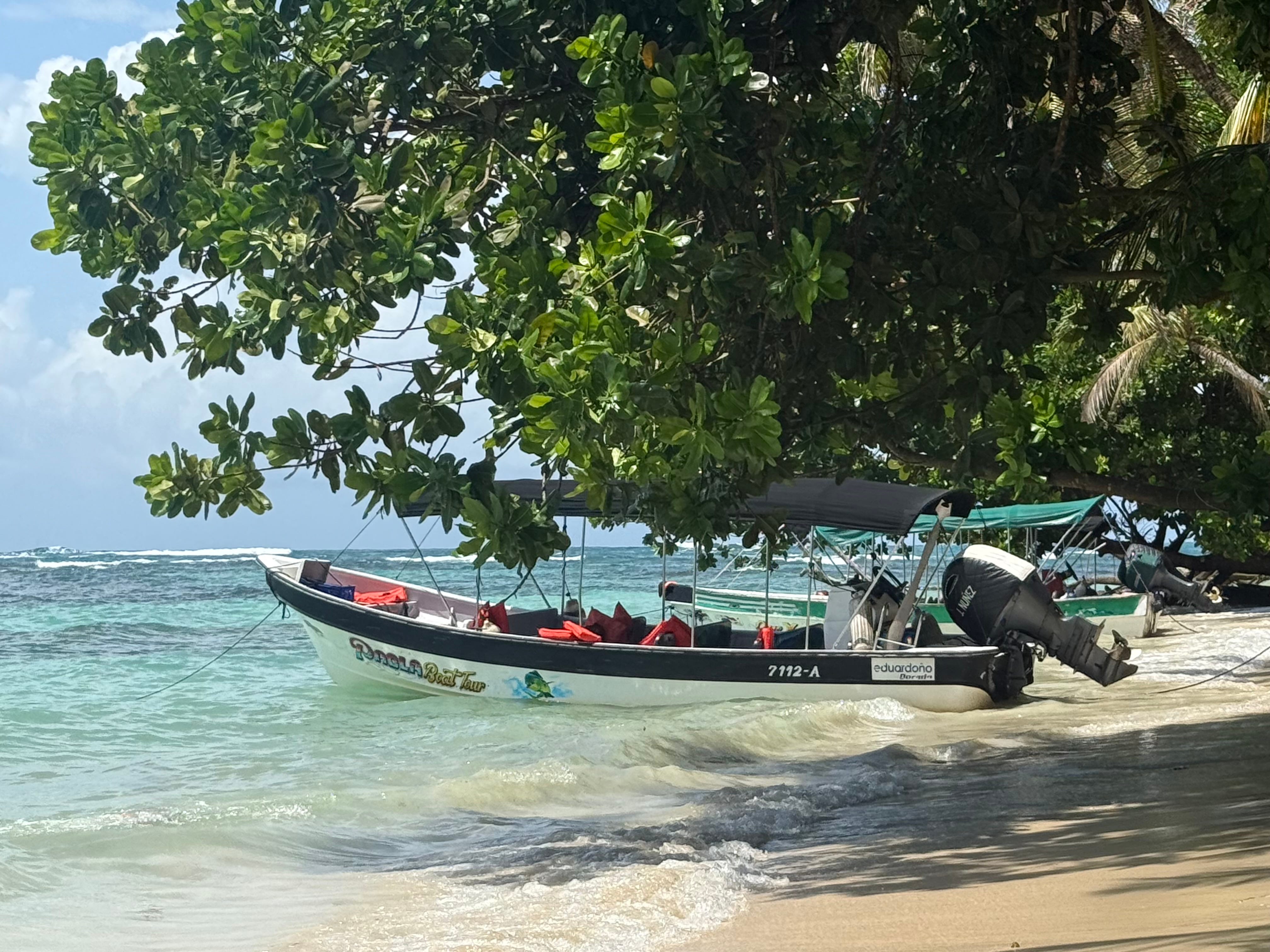
From Bocas town there’s a day trip to the Cayos Zapatilla, so why not? It feels like a journey from a lively Caribbean town into a tropical postcard or screen saver. We arrive at the dock at Bocas town around 0900. The boats are small, open launches, and as they pull away from Bocas Town, colorful waterfront buildings recede behind you. Pelicans skim the water and the air smells of salt and mangroves. I’m very excited to see frigate birds soaring high above us, they’re a remarkable bird, weighing up to 2kg a a massive 2 metre wingspan. They’re extremely long, have narrow wings with a deeply forked tail.
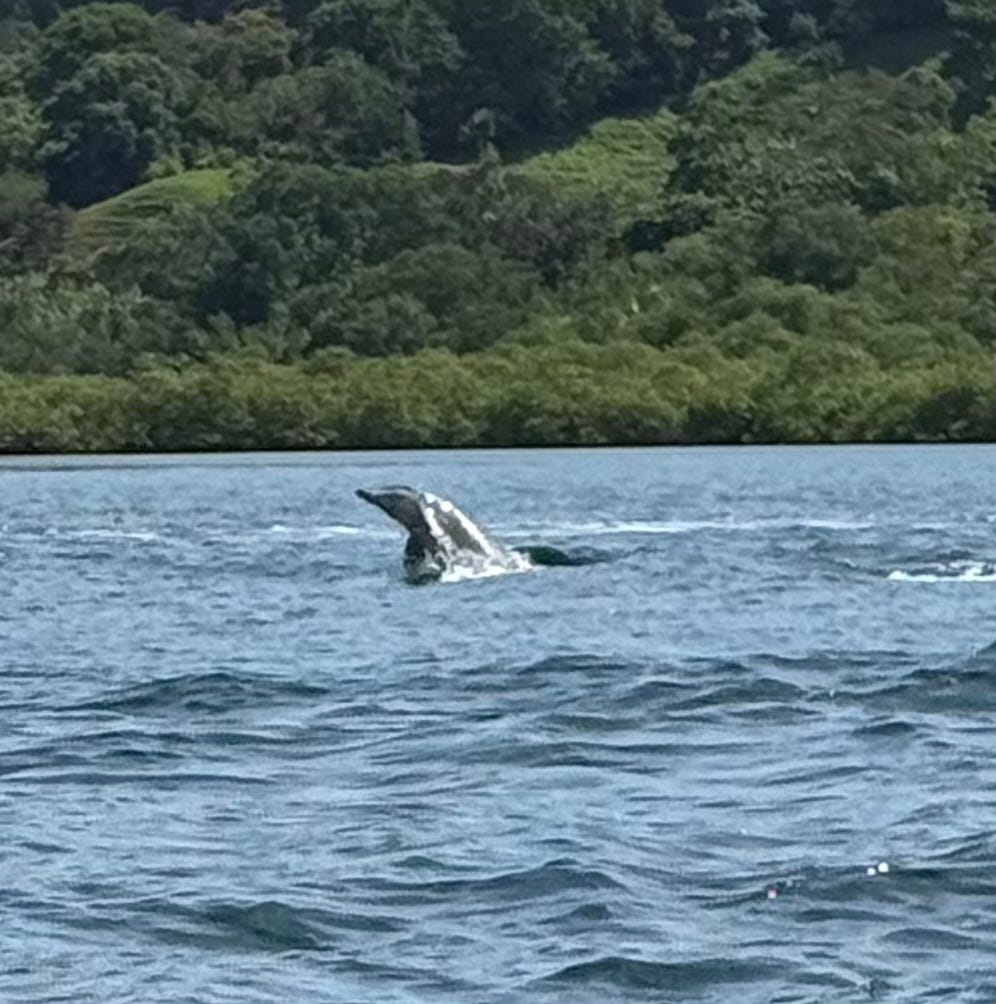
The first part of the ride winds through sheltered channels between islands. The water is calm and glassy, reflecting the jungle-covered shores. Our boat stops in Dolphin Bay, where bottlenose dolphins are frequently seen surfacing beside the boat. We were fortunate enough to see a couple of them playing in the water, then as one of the small boats increased speed they chased the wake of the boat.
Next comes a stop at coral reefs near Cayo Coral. We slip into warm, clear water and float above coral gardens alive with parrotfish, angelfish, butterflyfish, and schools of tiny tropical fish. The sea glows turquoise beneath the tropical sun. Then the boat heads farther out through the Bastimentos Island National Marine Park. The water deepens to sapphire blue, and eventually two tiny islands appear on the horizon. They look almost unreal: rings of white sand, coconut palms, and dense green forest surrounded by brilliant Caribbean water.
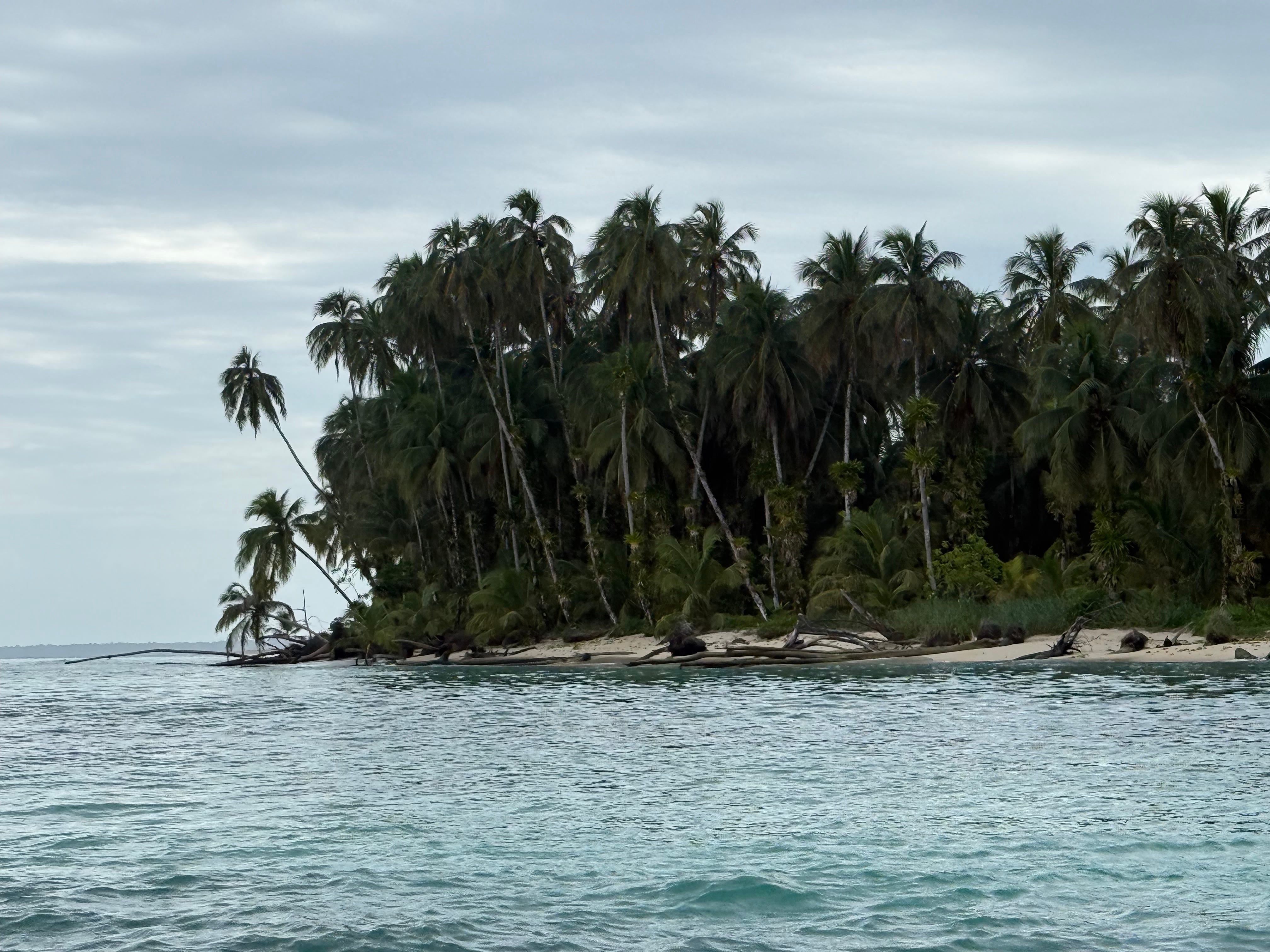
Stepping ashore on Zapatilla feels like arriving on an uninhabited island. There are no hotels, roads, or beach bars—just sand, sea, coconut trees and forest. The beaches are dazzlingly white, the water ranges from aquamarine to emerald, and gentle waves break on the reef offshore. Paradise! We spend the late morning swimming, and circumnavigate the island by foot, it’s 2 km around walking the shoreline. It’s totally such a fabulous day that we do it again the next day, but to another island. Superb snorkelling, warm crystal clear water, such a fabulous combination.
Thunderclouds roll in in the late afternoon, enormous claps of thunder overhead, then the heavens open. Suddenly people duck for cover and out pops umbrellas for sale. Everyone here is used to these tropical storms, but they take us by surprise. Lots of rain falls in a brief amount of time. Gutters fill and spill over, more umbrellas appear on the street for sale, tropical storms are amazingly drenching and usually short lived.
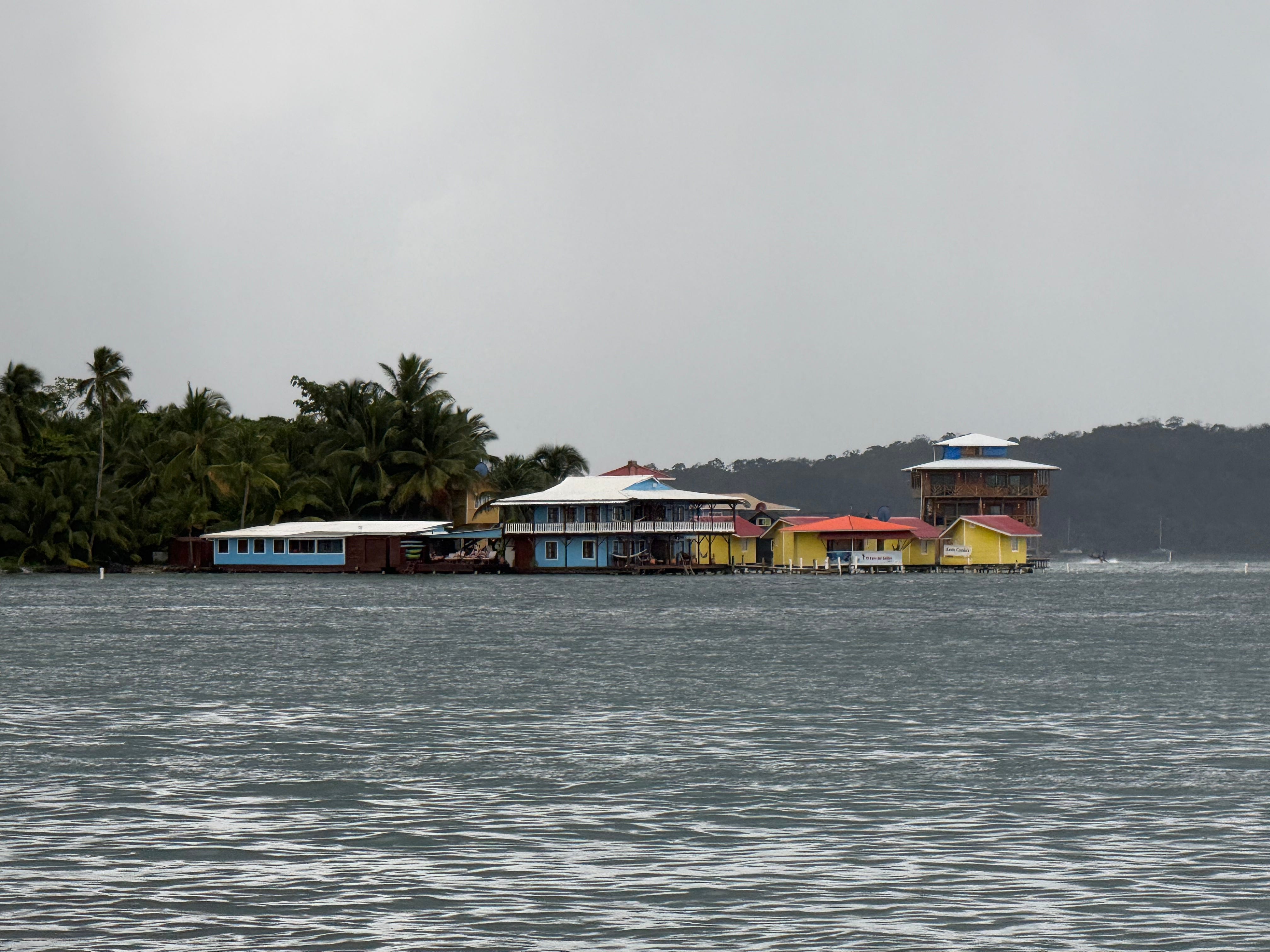
The island time is too brief, suddenly it’s time to head backup to San Jose. This time we head off on the ferry heading to Almirante on the Panama mainland. Arriving at the waterfront in Bocas Town early in the morning after a wander along the near deserted streets. The docks are busy with fishermen, cargo boats, and travellers dragging suitcases across wooden piers. Colorful Caribbean buildings stand on stilts over the water, painted in blues, yellows, and reds.
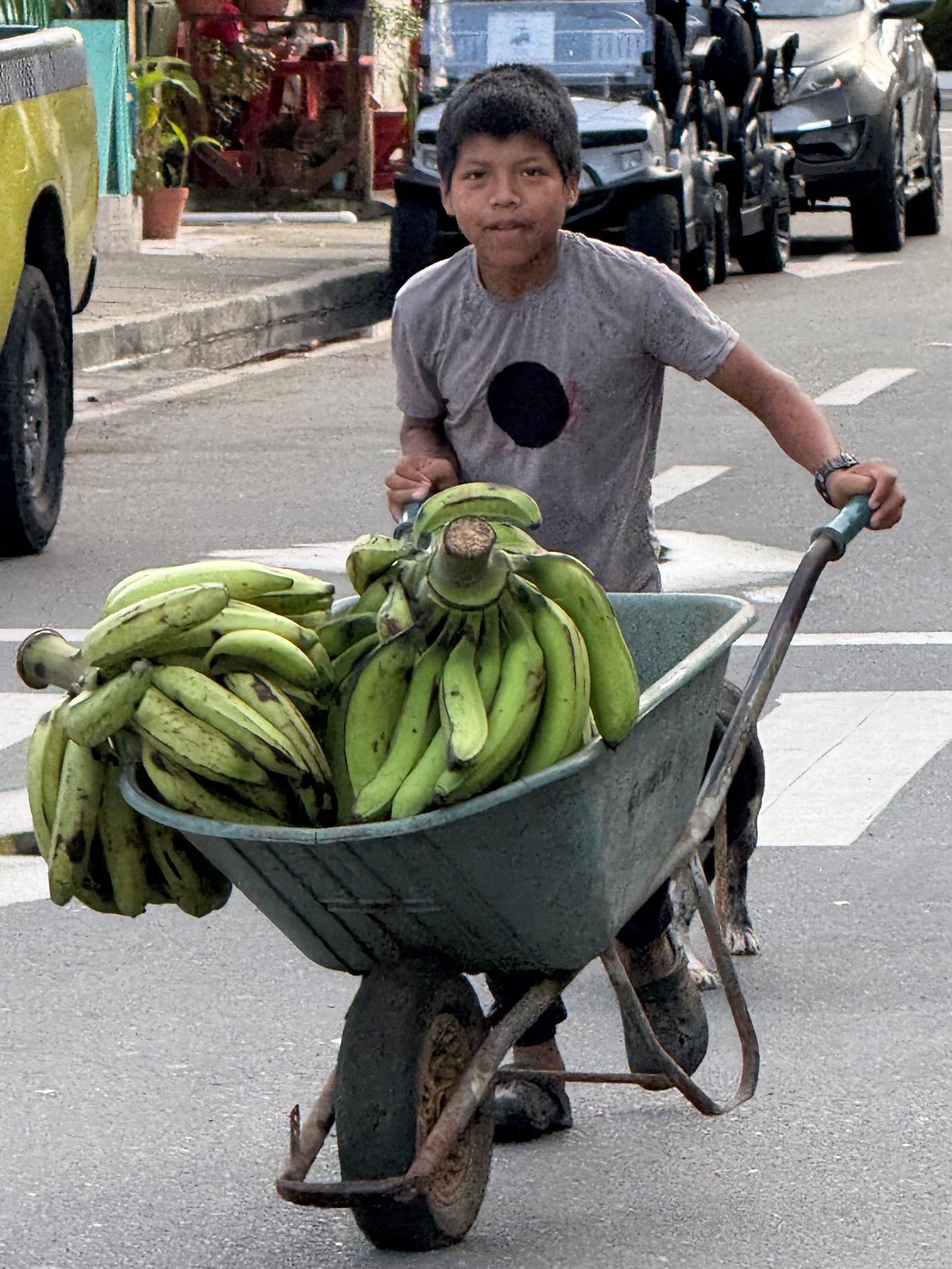
As the water taxi pulls away, the town quickly shrinks, and the idyllic island time disappears behind us. The boat skims across the waters of Almirante Bay, a broad expanse sheltered by the islands of the archipelago. The boat picks up speed, bouncing lightly over the waves. Warm Caribbean wind rushes past and carries the smell of salt and mangroves. Looking back, Bocas Town becomes a thin strip of colourful buildings framed by palms. Midway across the bay, islands lie scattered on the horizon. Dense tropical forest reaches down to the shoreline, and occasional stilt houses appear hidden among mangroves. The crossing usually takes about 25–30 minutes by water taxi. Boats depart frequently throughout the day, making this one of the most common journeys in Panama.
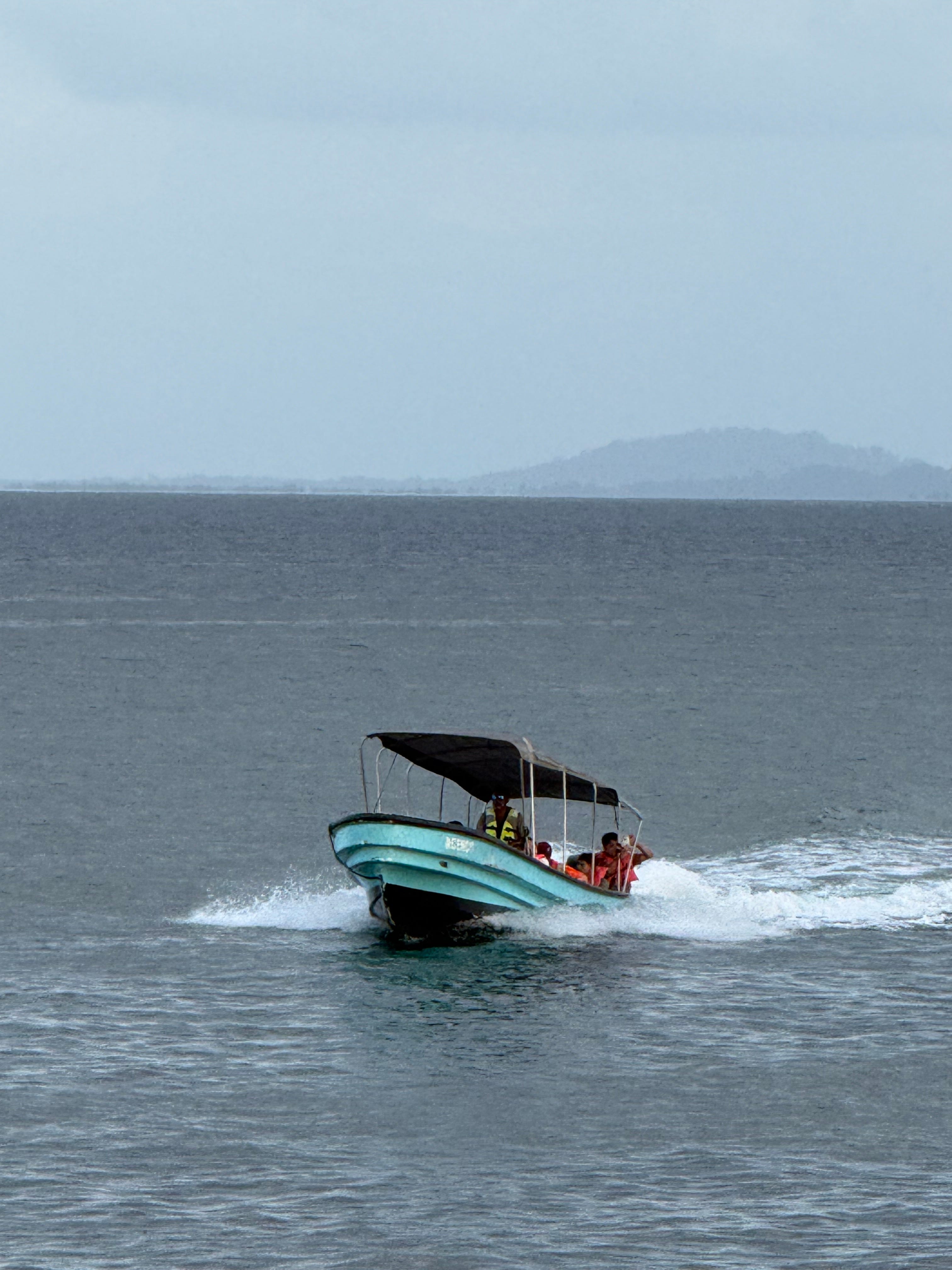
As the mainland approaches, the atmosphere changes. Instead of islands and beaches, you see docks, warehouses, and working port facilities. Almirante is a banana-export port surrounded by lush lowland rainforest and plantations. The final minutes are a contrast to the tropical-island feel of Bocas. The water remains calm, but the shoreline becomes busier and more industrial. The boat glides alongside the dock, engines drop to idle, and passengers gather their bags. Within moments you’re stepping onto the mainland of Panama, where buses head toward places like Panama City, or in our case to Sixiola and the Costa Rican border.
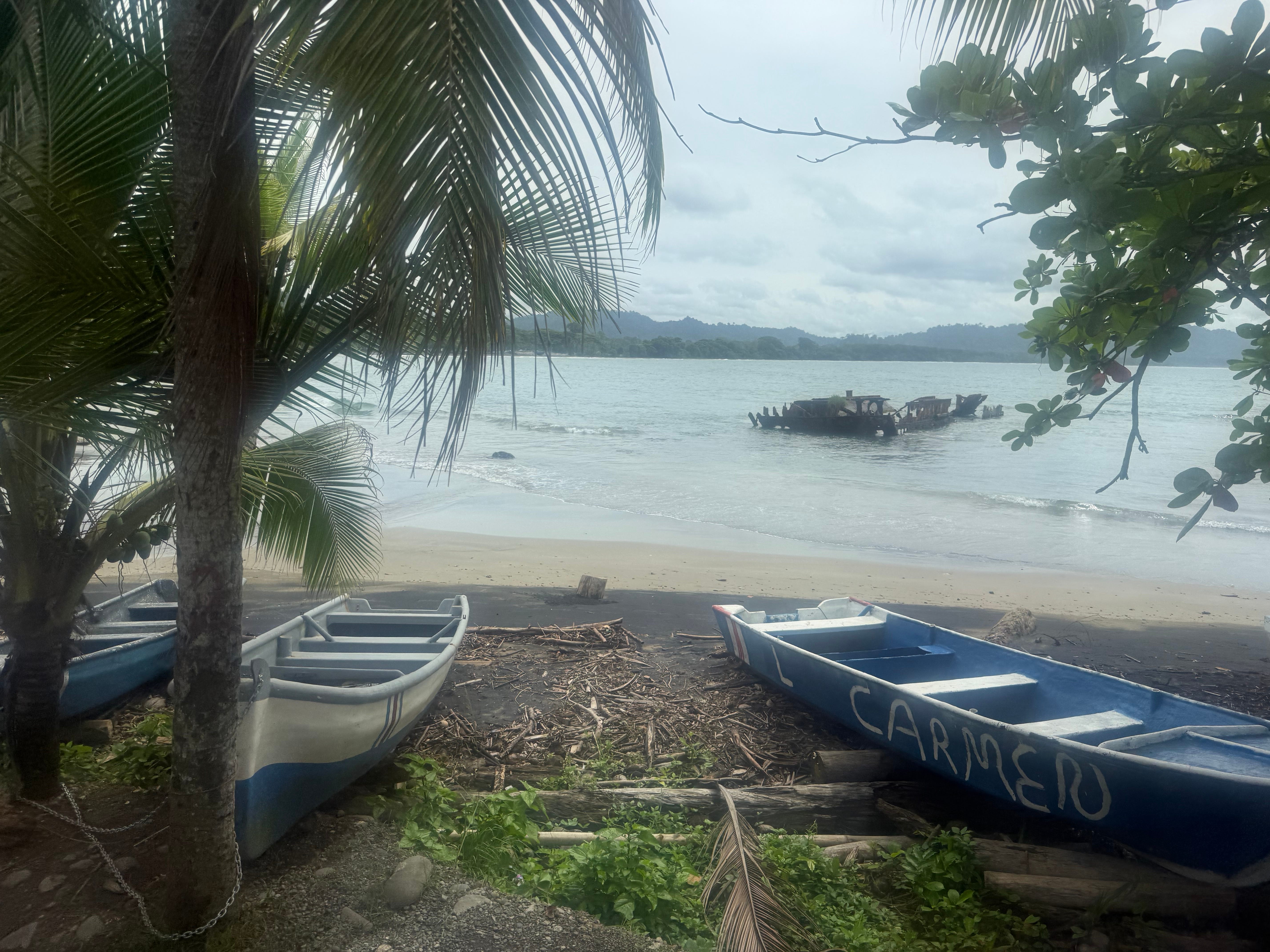
Panama is lush, so much greenery. Jungle vines, banana trees, coffee plantations! So pretty. We walk across the border, the border guard when he picks up my Australian passport says “nice country!” and I can’t help but agree with him. It’s around 10 hours of road travel from Almirante to San Jose tucked up in a bus.
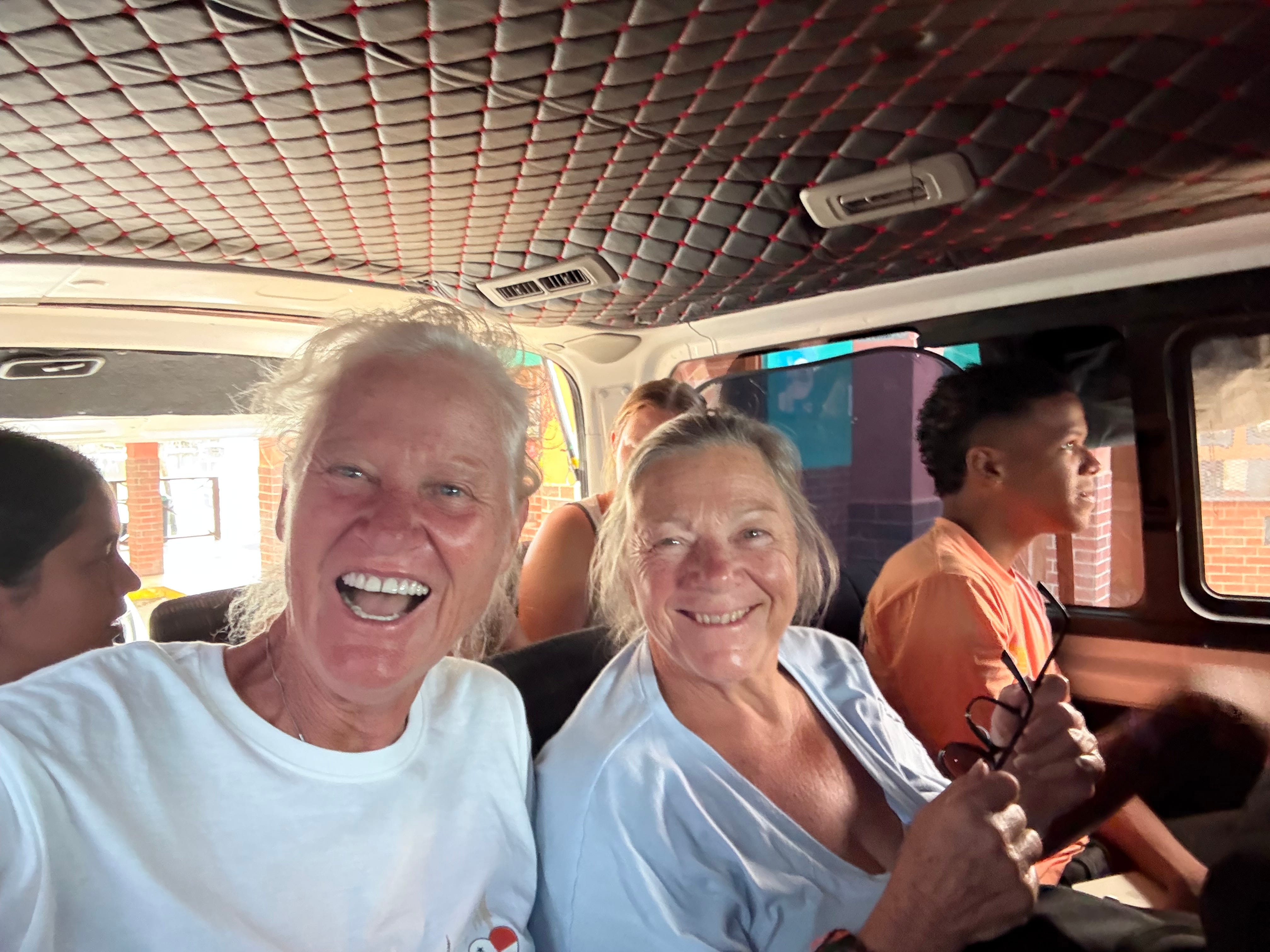
The last part is winding roads climbing ever upward through dense cloud forests. As with most cities, San Jose is busy so we crawl through late afternoon traffic to reach the bus terminal, a couple of nights here, the day in between spent exploring the city, then the long journey home starts.
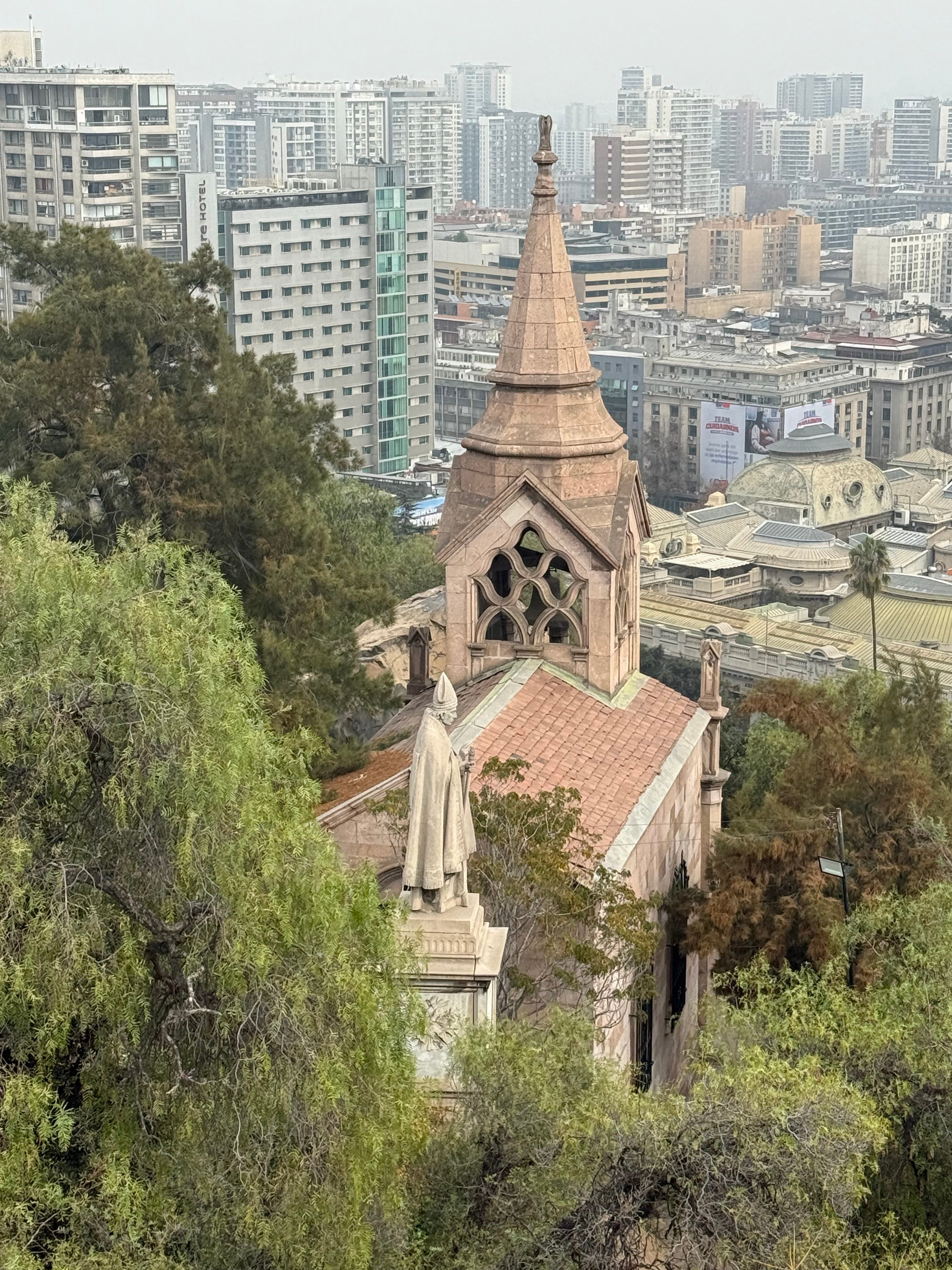
Panama City is a hub for Copa Air, we catch our early morning flight from San Jose to Panama where we are to join our next flight to Santiago. The first flight is delayed and the next flight is scheduled to depart 38 minutes after that first flight arrives. With a twenty five minute delay making the next flight looks a bit grim. Fortunately a small travel bus scoots through the terminal, we’re invited to board and it whizzes through the airport getting us to our next flight, the doors close and we have push back soon after we board! Phew.
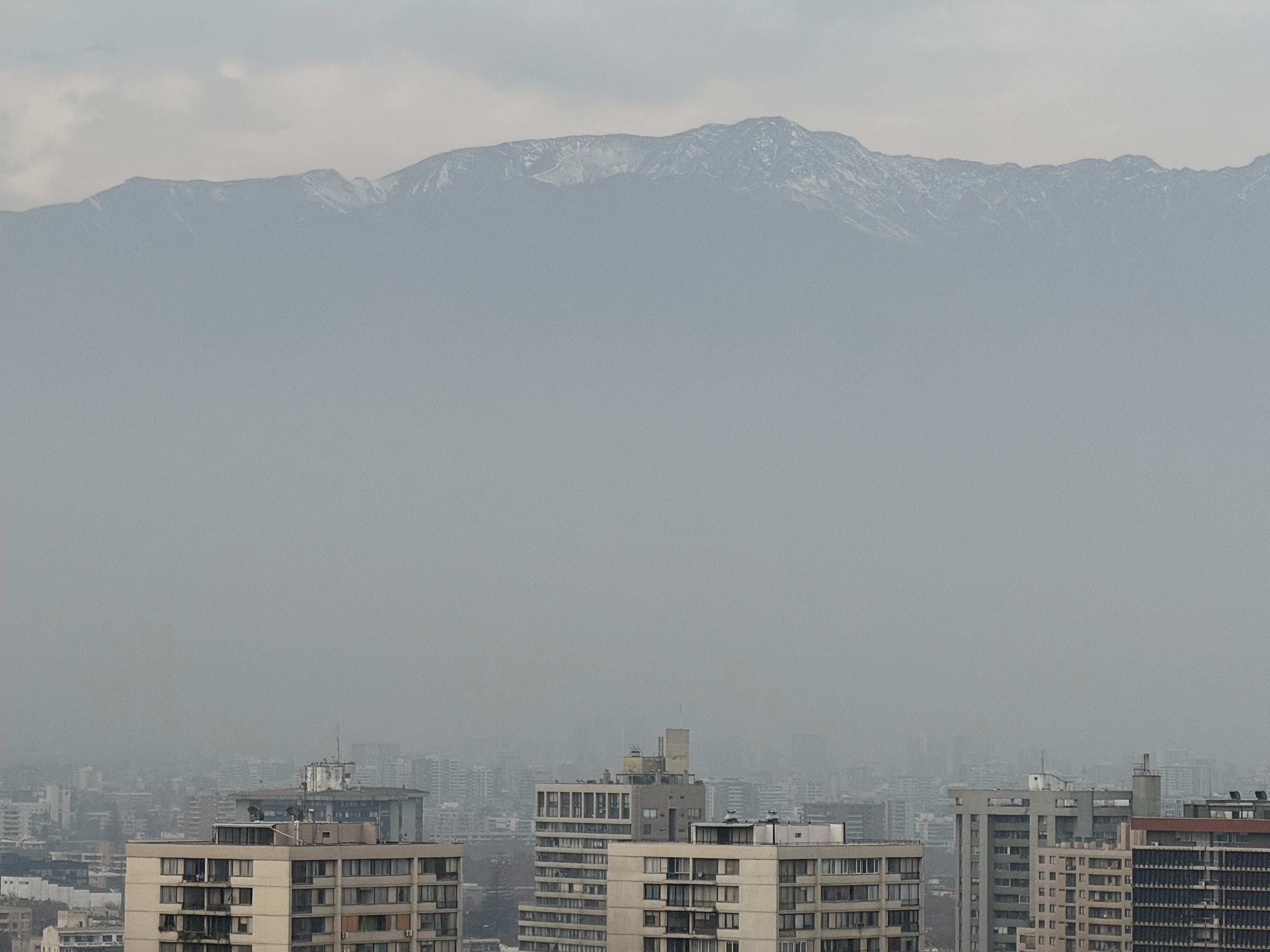
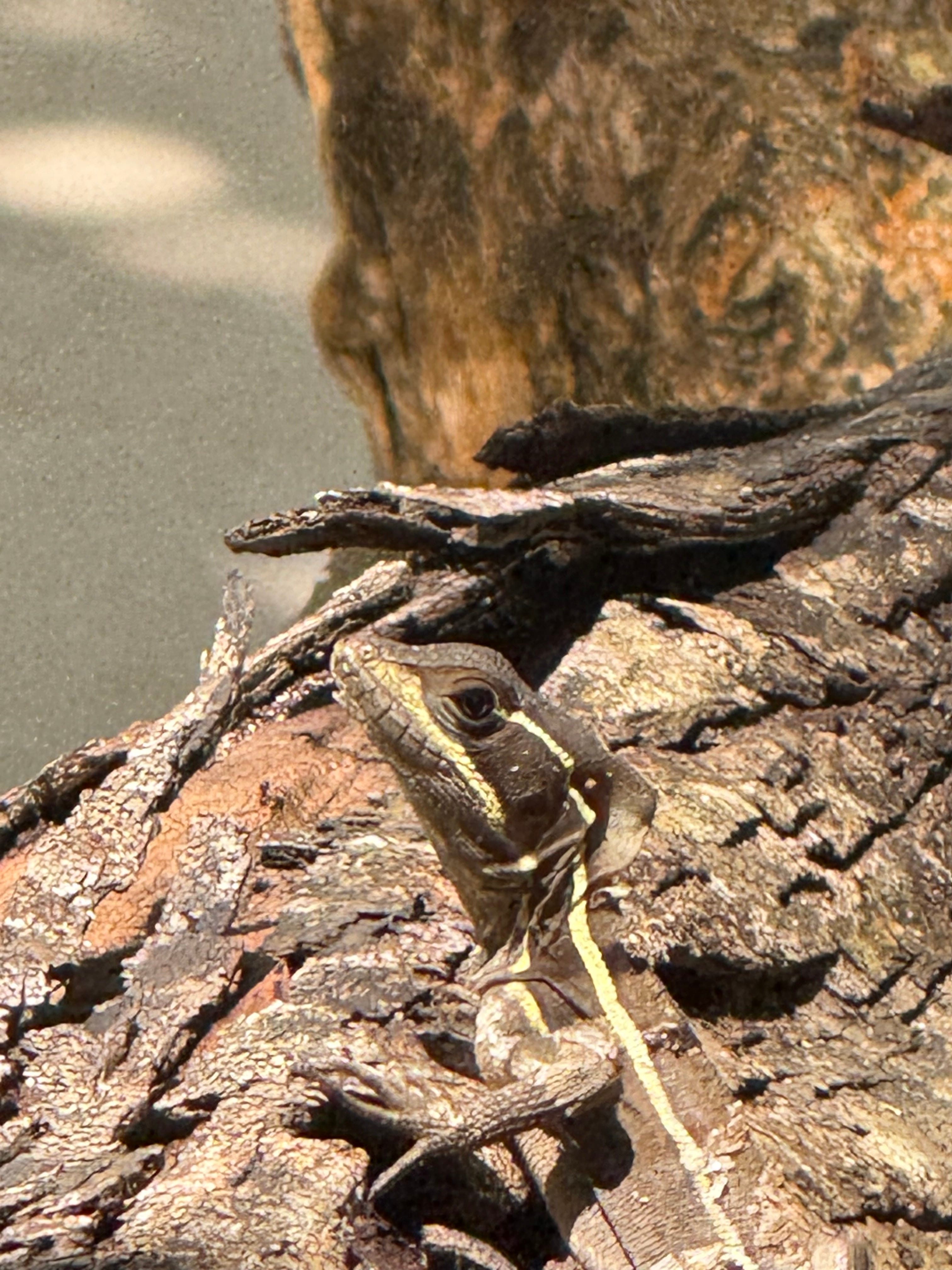
Santiago is cold! 12 degrees. Brace for return to Melbourne, how quickly you forget cold weather when you’ve been sweating in mid to high thirty degree heat. The city calls to be explored, we enjoy a local “tip for time” walk. This city has lots of interesting history. It’s nestled in a valley surrounded by the Andes mountains, you can see snow capping the top of the taller sections! As shows in the pic above. No wonder it’s cold. And so this Central American adventure draws to an end. What a sensational time. Now it’s time to head home, wash my clothes and repack in preparation for the next adventure. I’ll leave you with this cute lizard from the Zapatilla islands. He was too cute not to share.