
The Tigers Nest སྤ་གྲོ་སྟག་ཚང
Bhutan འབྲུག་རྒྱལ་ཁབ 🇧🇹

Bhutan is a Himalayan kingdom known for its pristine environment and spiritual heritage, it’s also a twitchers paradise, with over 700 species of birds across the country. So as you would expect it also provides a golden opportunity to see rare Himalayan birds. An 0600 start meant a very early wake up. I’m fortunate our fabulous driver (who is also a birding guide), Namgay, offered me to come along with him on a morning bird watching, so getting there before dawn when the day bird world awakens was super important. We follow the Punatsangchhu river as it winds through the valley. Finding a safe spot to park we then meander down to the rivers edge to watch the birds awakening. I am thrilled to see quite a few migratory birds that have wintered in Punakha. They’ve made the journey from Tibet up over the Himalayas to nest and raise chicks in this warmest part of Bhutan. The colour of the Ruddy Shelducks is stunning, their rufous-cinnamon body plumage and a contrasting paler cream coloured head and neck standing out against the blue of the river and the bleached white of the river stones. They’re a migratory bird and spend November to March in Bhutan, it’s a delight to see them. But I’m waiting for the opportunity to see the star of the Bhutan birds.
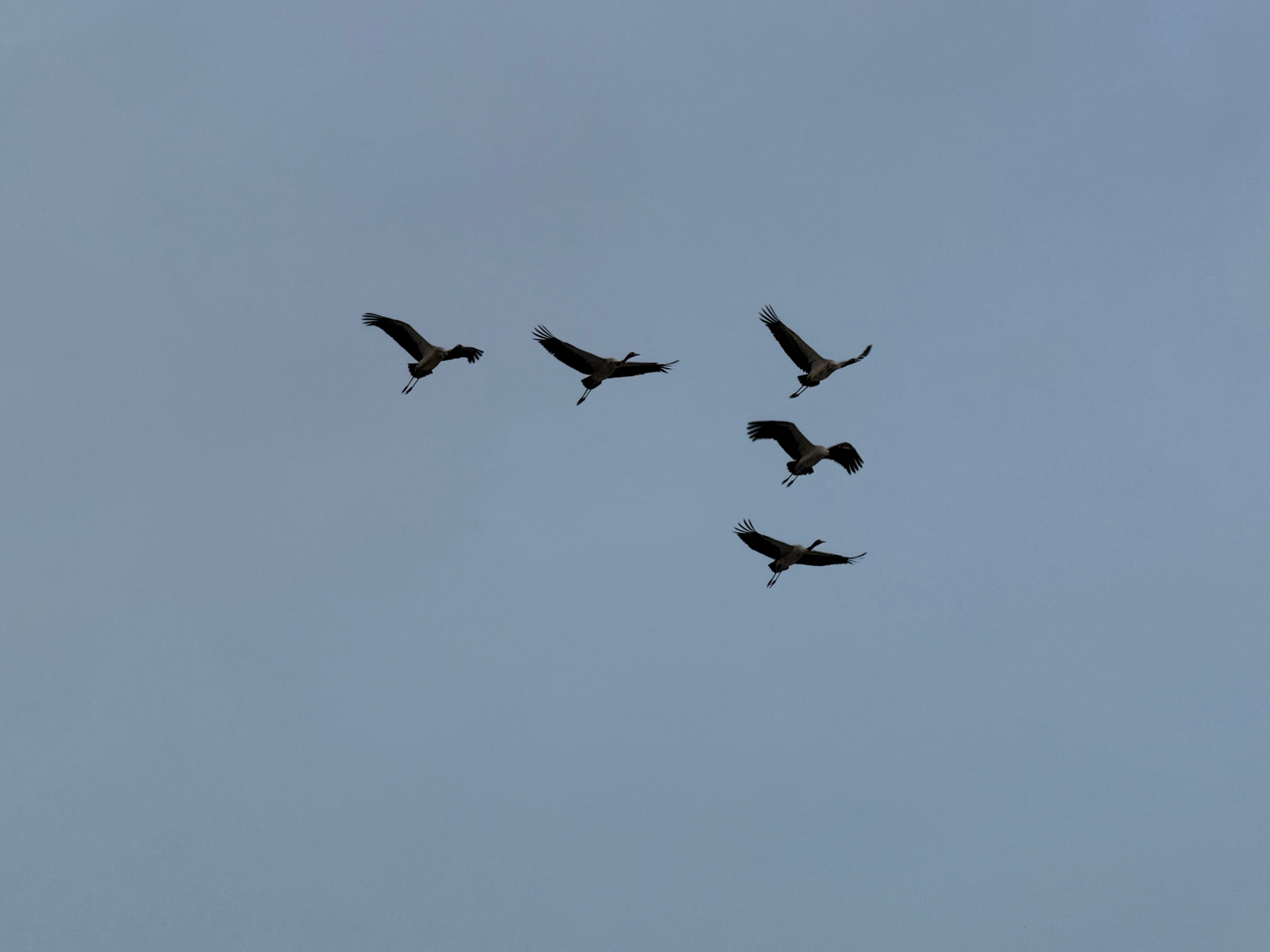
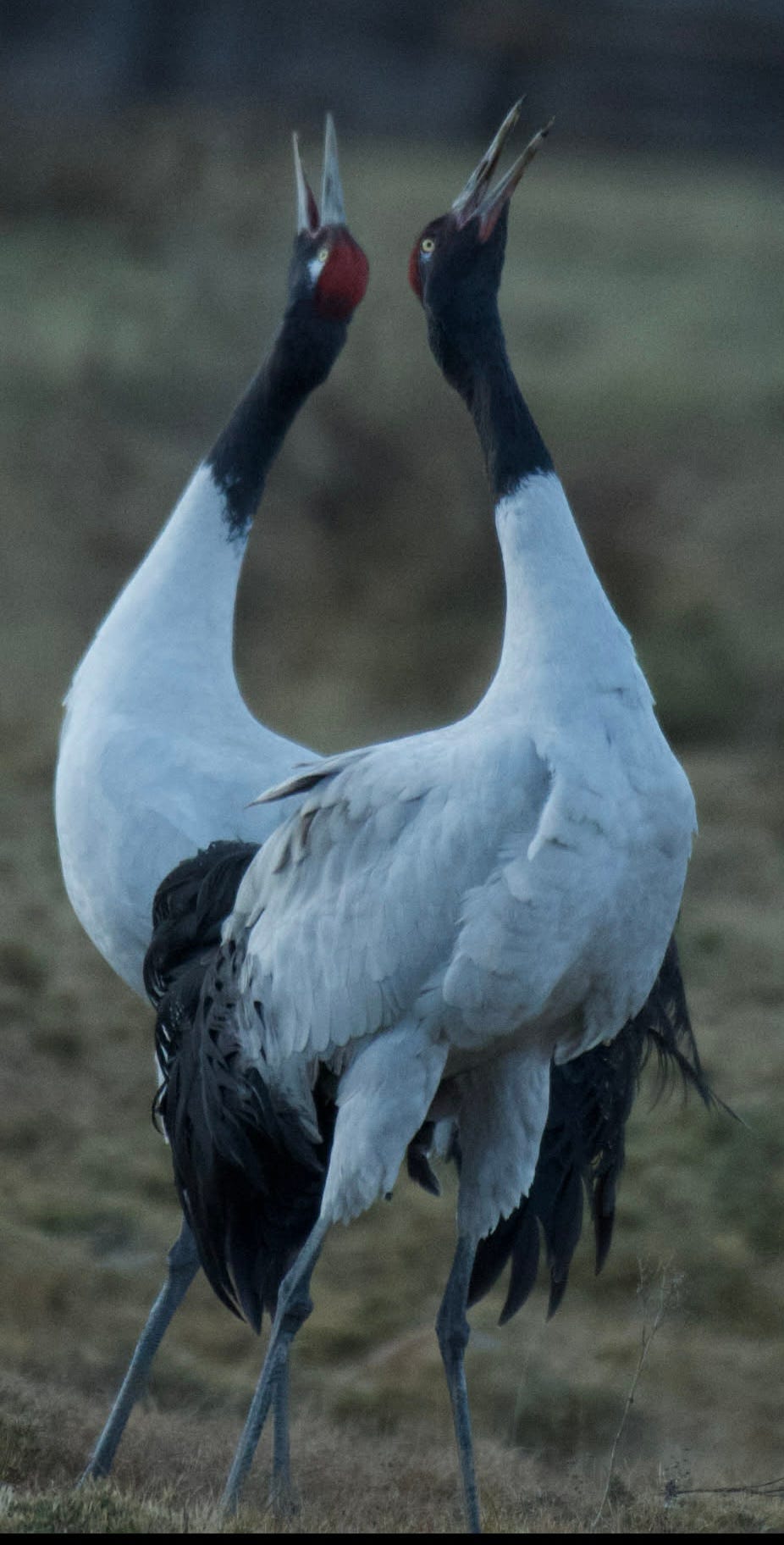
The black necked crane is in my humble opinion the star of the show. These majestic creatures, revered by Bhutanese culture and protected by national law are more than just seasonal visitors, they are symbols of peace, longevity, harmony and nature. Migrating from Tibet across the Himalayas to the Phobjikha valley for the winter months, they nest and raise their chicks in the safety of the valley. Bhutanese revere these birds, there is a Crane festival on November 11 each year to celebrate their arrival. This year the annual count of cranes for the season was around 600. Scientific name, Grus Nigricollis, they are a big bird, around a metre and a half tall, weighing around 6kg, and with a wingspan of two metres. They are one of the rarest cranes in the world. The valley has strict regulations around the cranes to protect them, even putting all their electrical wires underground to ensure a safer flight path for them. I’m lucky enough to see this formation of five black necked cranes flying above me and then settling in on the far rivers edge to rest and replenish before continuing their flight toward Tibet. In all we see about twenty variety of birds in this mornings adventure, it’s such a delight and privilege to have been able to go along with Namgay to see this part of Bhutan.
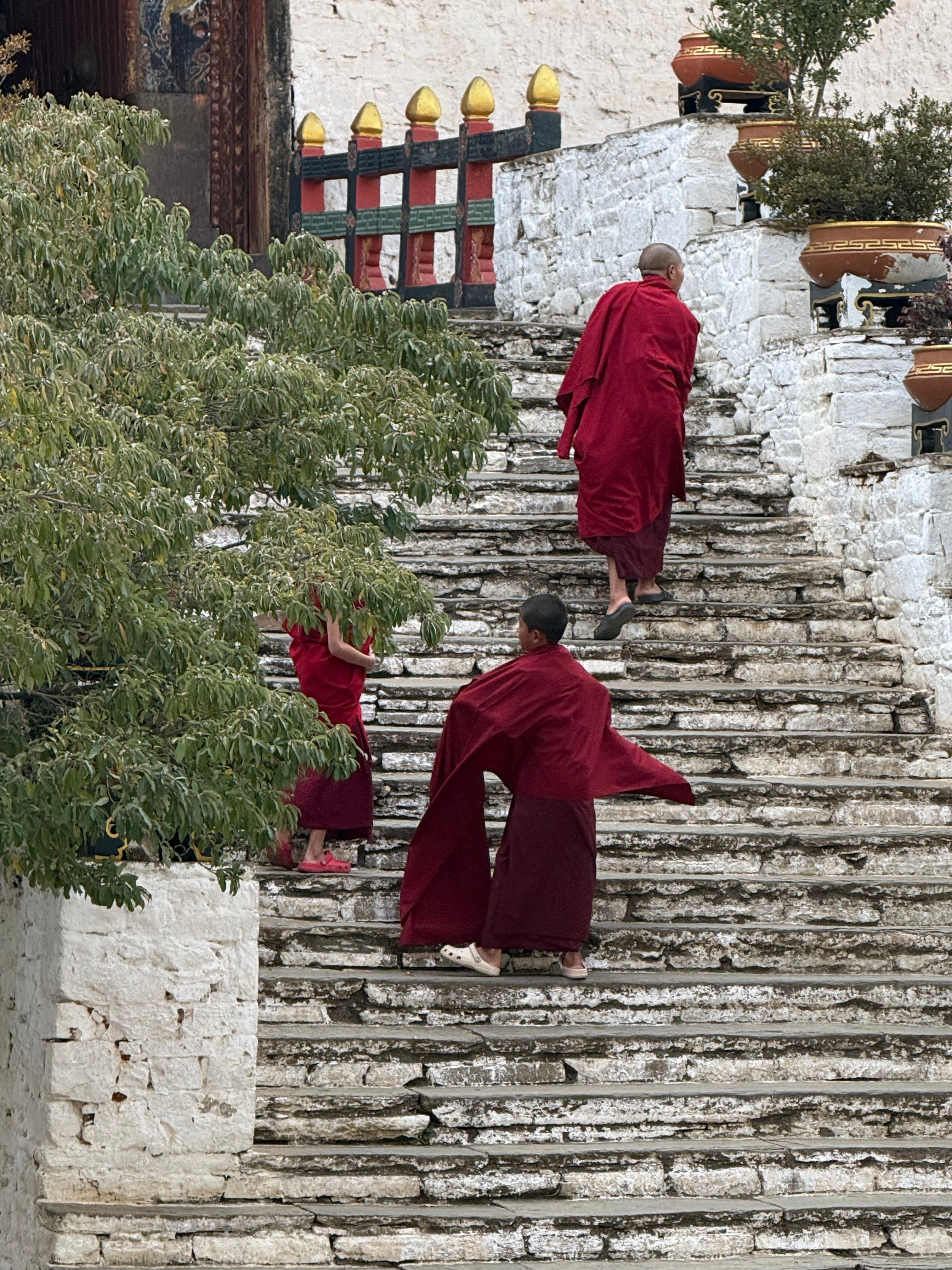
After breakfast we head further toward the east to Phobjikha, it is a town nestled in a vast, bowl-shaped glacial valley flanked by forested hills and alpine meadows. The flat valley floor is composed of wetlands that serve as critical feeding grounds for the black-necked cranes. Also in the valley perched high on a hill is a monastery called Gangtey Goemba. Quite simply the name means “the temple on the hilltop.” Built in the 17th century, this is one of the largest temples in Bhutan. Part of it has been refurbished after a fire, but the powerful cultural earthen colours and rammed earth and wood prevails. It’s a monastery teaching Tibetan Buddhism, the monks are in the monastery during our visit, their maroon and yellow traditional costume stands out against the white walls.
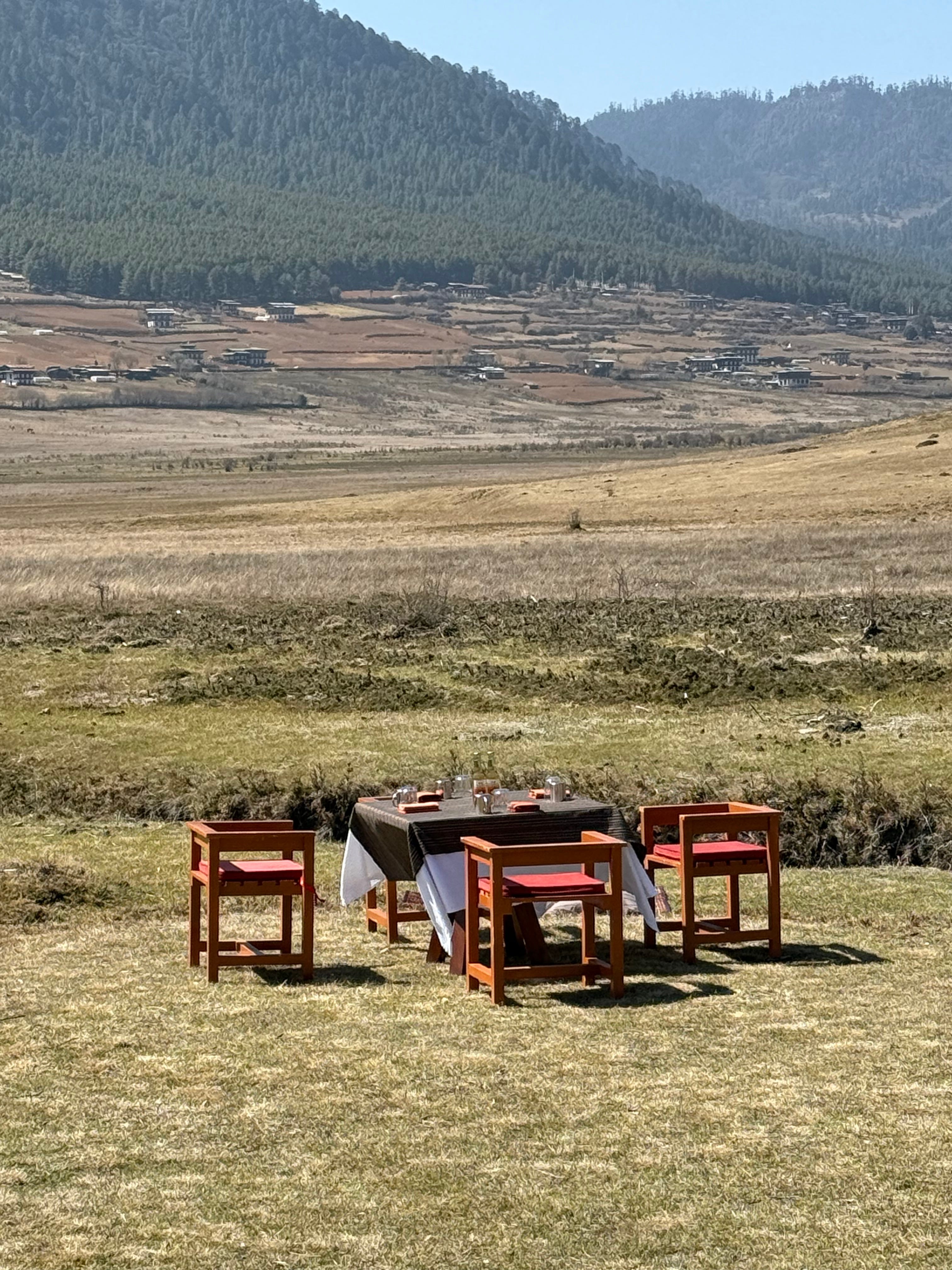
A forest hike follows our exploration of the monastery. We traverse well hiked forest trails filled with pines, oaks, and daphne, the aroma of the pine needles and daphne fill the air, it’s a very pleasant aromatic hike indeed. We wander through a small part of the village where we see the local farmers ploughing the field by hand for potato planting. This area is well known for potato and cabbage, our lunch is potato done a variety of ways, plus chilli, cheese and some other vegetables, I can report these potatoes to be delicious! Along the way are small lookouts across the wetlands where you may get a chance to see the cranes. We emerge from the forest to a gorgeously set table where lunch is served picnic style alongside the wetlands.
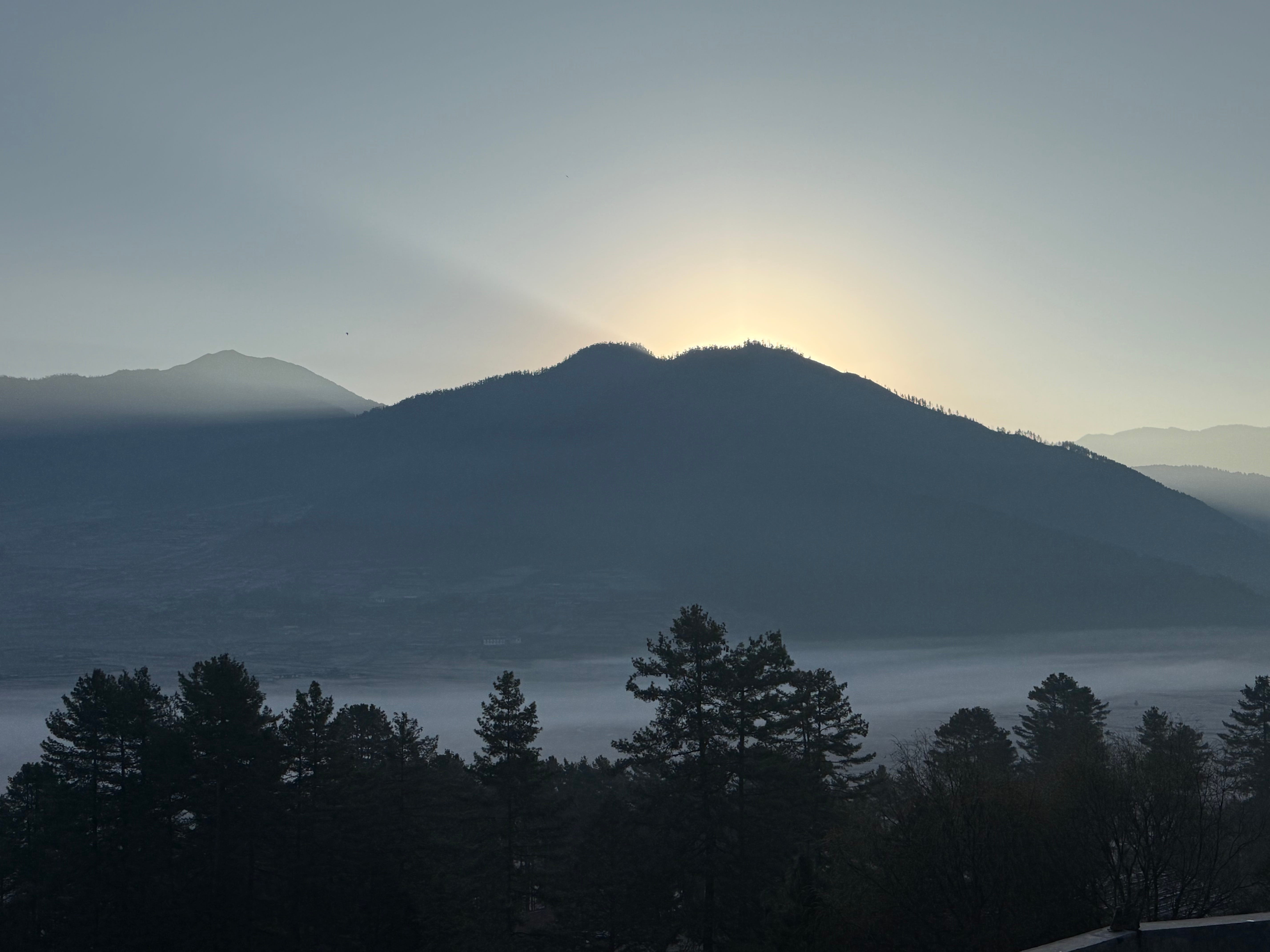
The hotel we are staying at overlooks the valley, where we can see the cranes in the wetlands of the valley. There’s a crane research centre just below the hotel with a couple of cranes rescued after injuries in residence, they are Karma and Pema, a male and a female, they’re magnificent birds. They’re unlikely to be released to the wild again due to injuries they’ve sustained. It’s amazing to see them up close, but I feel sad that their natural instinct is to fly north for the summer and they can’t. Binoculars are at the windows of the research centre, it’s easy to observe the cranes from afar as they forage for food in the wetlands. From our hotel we can view the wetlands and are lucky enough to witness a magical sunrise over the mountains the next morning and the fogginess of the valley. It most certainly is a magical setting.
Travelling back to Paro for our final couple of nights in Bhutan we cross one of the mountain passes and to our delight it’s a clear day and the snow topped Himalayas have put on a gorgeous show glistening in the distance.
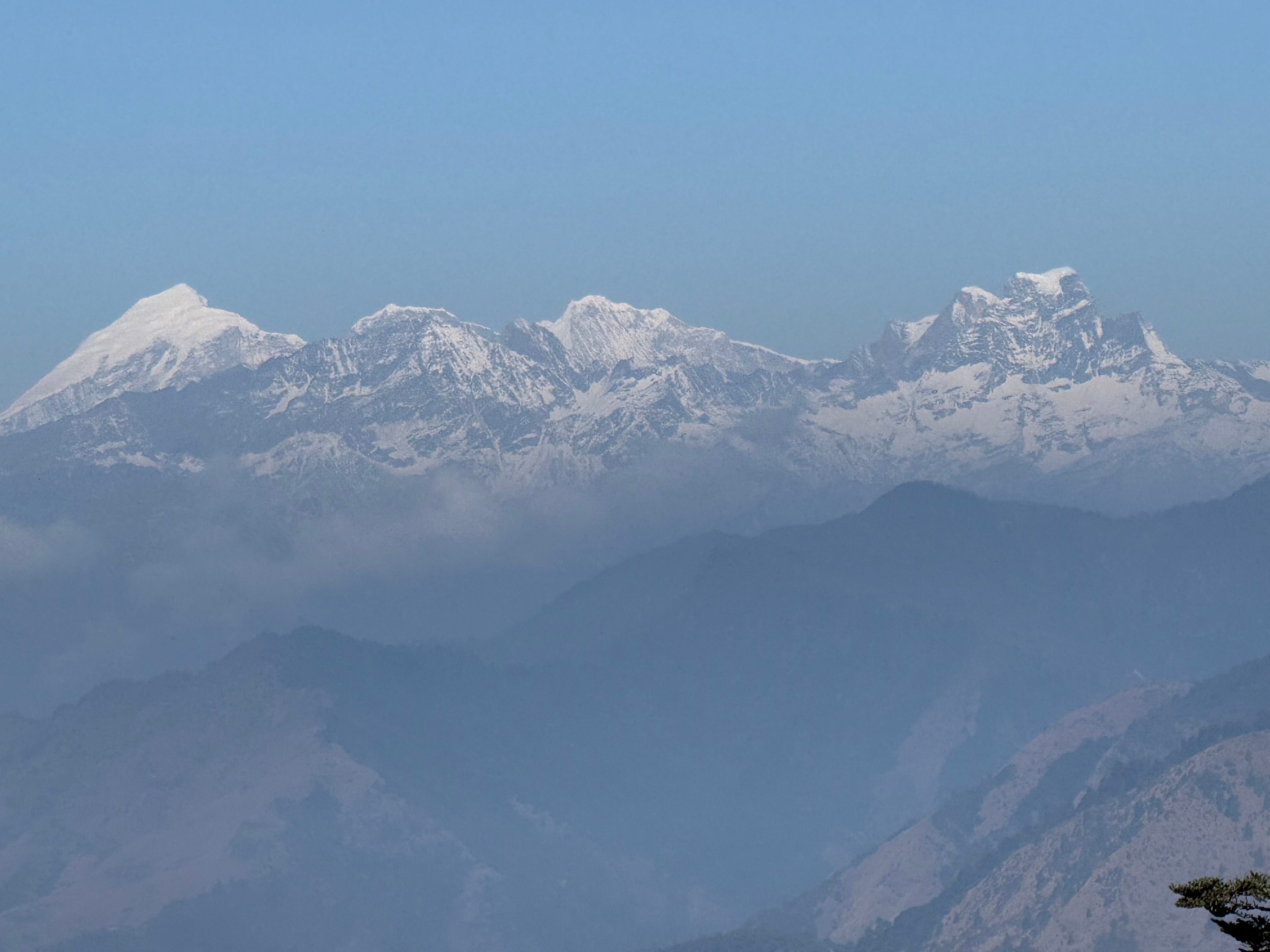
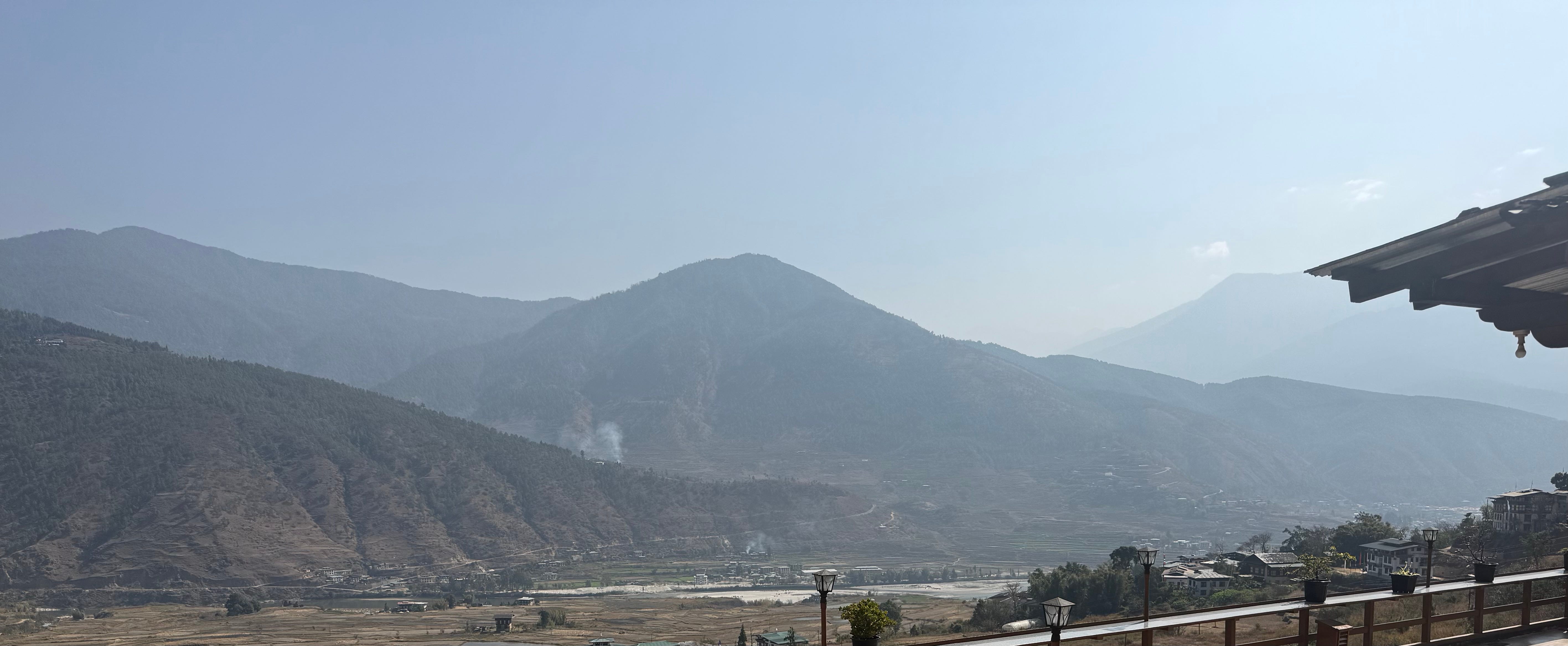
Interestingly the tallest mountains in the country are protected and are not allowed to be climbed! Fancy having mountains no one has climbed in your country. With mountains in differing shades of blue, green valleys and the whitest snow caps it’s an amazing sight. We stop for coffee at a small cafe with a balcony overlooking the Punatsangchhu river, we sit soaking up some warmth from the sunshine and enjoying coffee grown and roasted in Bhutan. A top spot for a morning stop. Check out this view
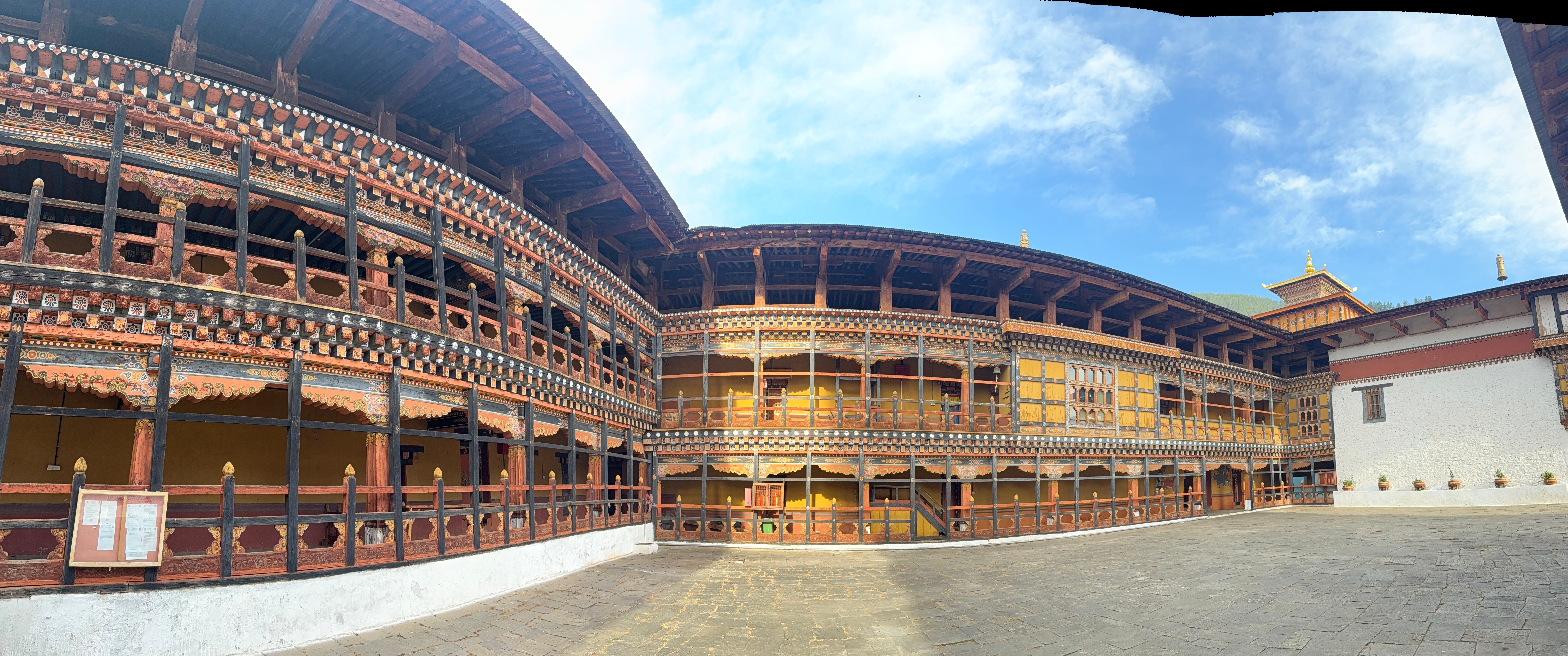
Arriving in Paro in the early afternoon gives time for a visit to the National museum. It was once a watchtower sitting proudly on the side of the mountain with spectacular views up and down the valley. It has two metre thick walls making it impenetrable and also providing insulation from winter cold and summer heat. Built in 1649, it houses a collection of armament, bronze statues of Buddhist deities, old crockery, thangka paintings, cultural outfits, mandalas, temple adornments and various other items it’s an interesting wander around as we clamber up and down wide wooden staircases between the five floors where the collection is held. Paro fortress is tucked in under the museum at the base of the mountain. The painting detail is superb, a work of art. Another imposing building, but in my humble opinion the Punakha fortress is the jewel in the crown.
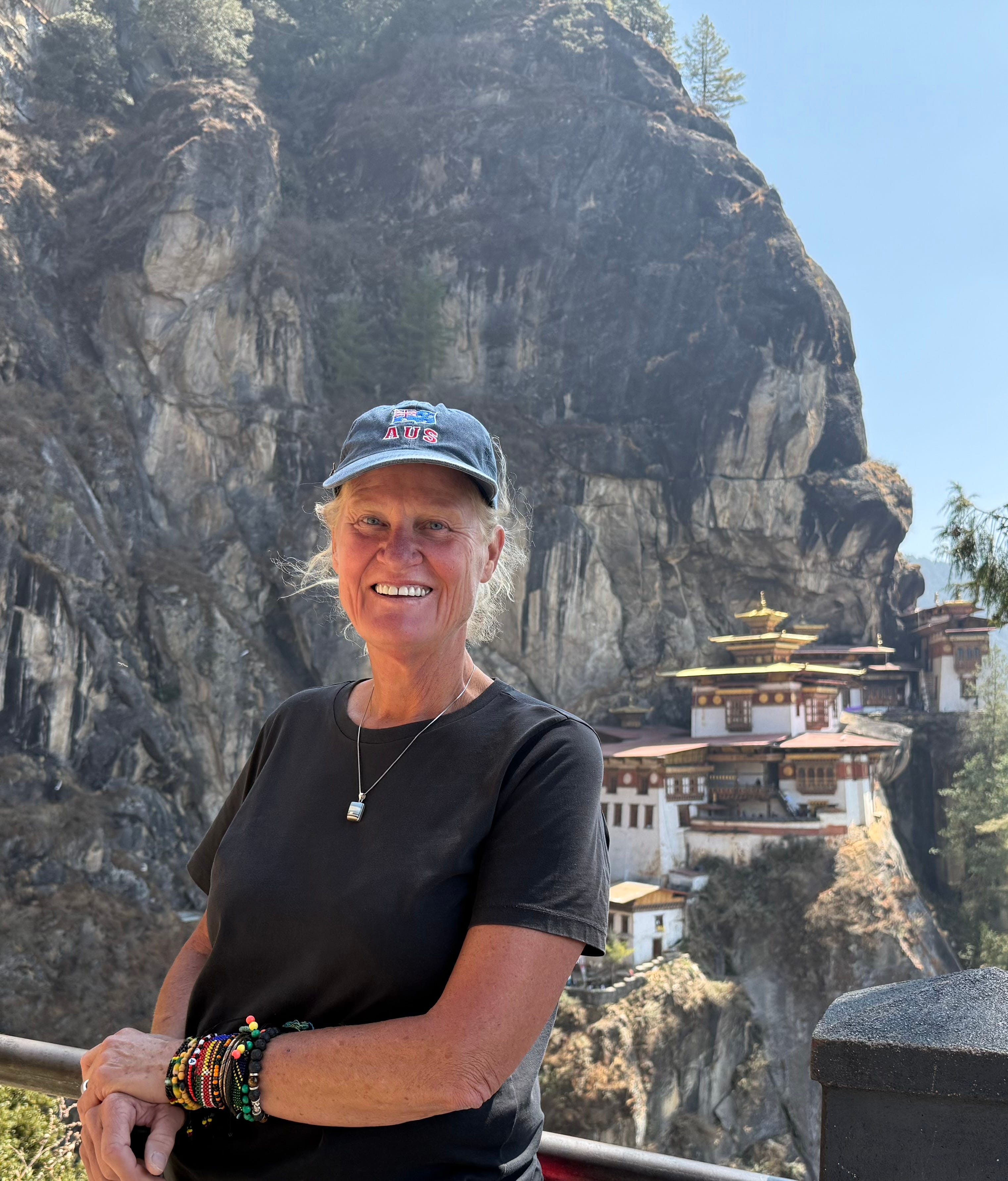
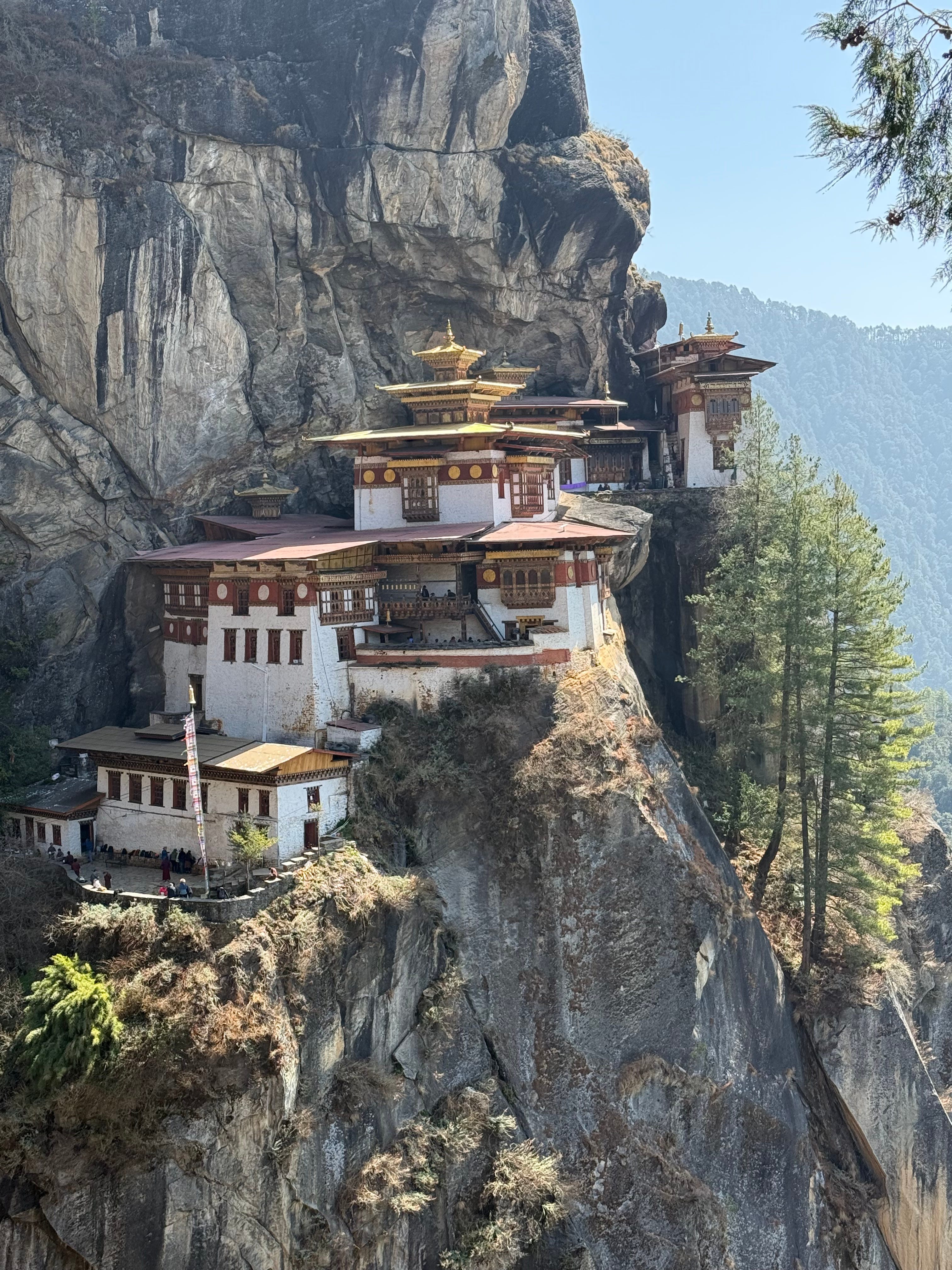
Our last early start is again 0600, this time to tackle the climb up to the Taktsang monastery. This monastery is also known as the Tigers Nest. It’s the iconic picture you relate to Bhutan It adorns the visa, and if you show anyone its picture I would think they would recognise it and immediately say Bhutan. It’s a misty start to the day, we arrive in the parking lot at the base of the mountain, boy oh boy it’s daunting, what a long way up the mountain this monastery perched on the edge of the rock face is. Maybe we’ve bitten off more than we can chew!
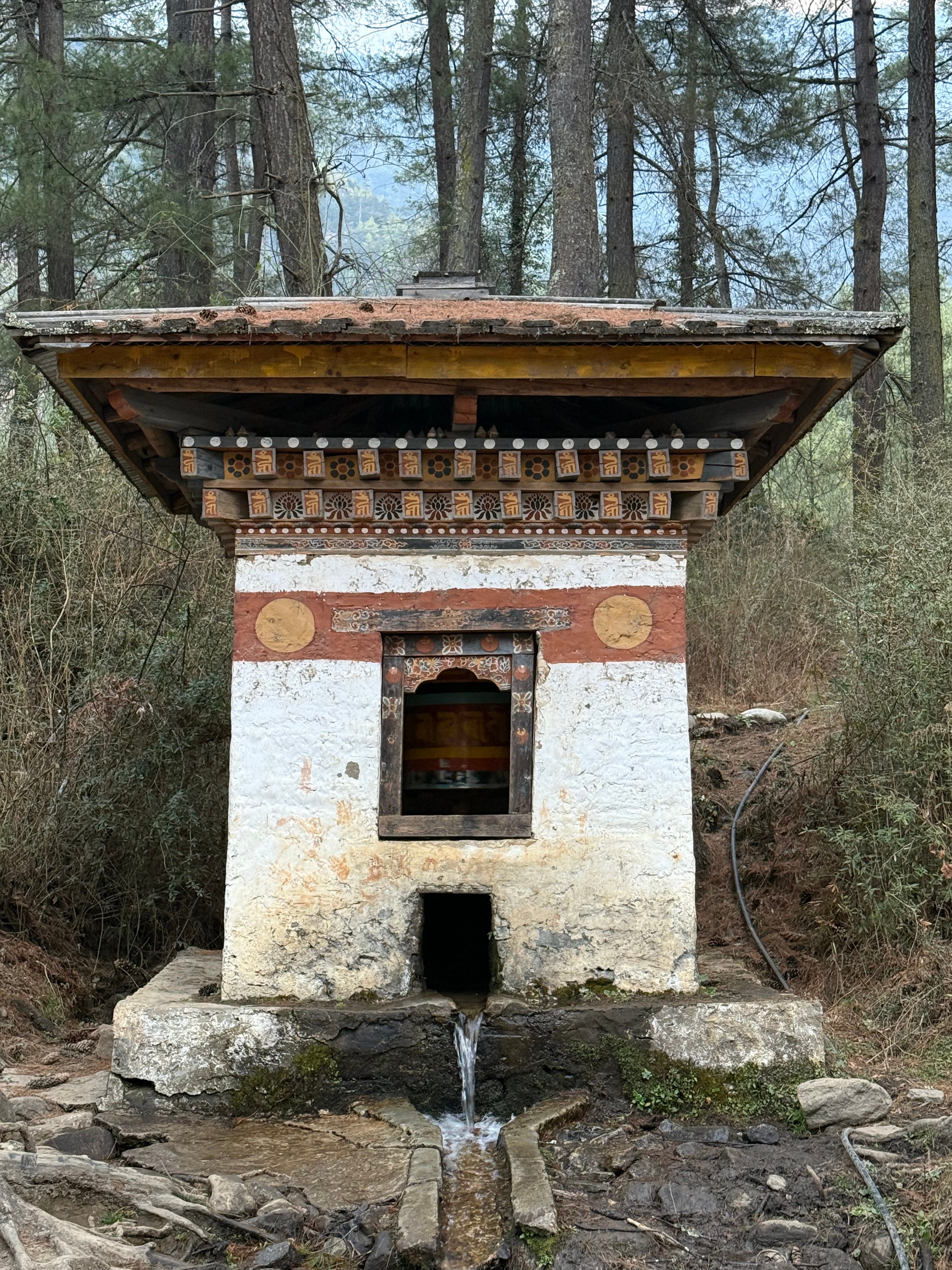
The early stage of the mountain has the trail meandering through forests thick with pines, rhododendrons (even one 120 years old!), daphne, oaks and teeming with bird life. We even see a Darjeeling woodpecker busily pecking away at one tree. A large water powered prayer wheel with its melodic tune is almost at the start of the hike, it’s a nice welcome (and nice to hear as you come back from in the mountain).
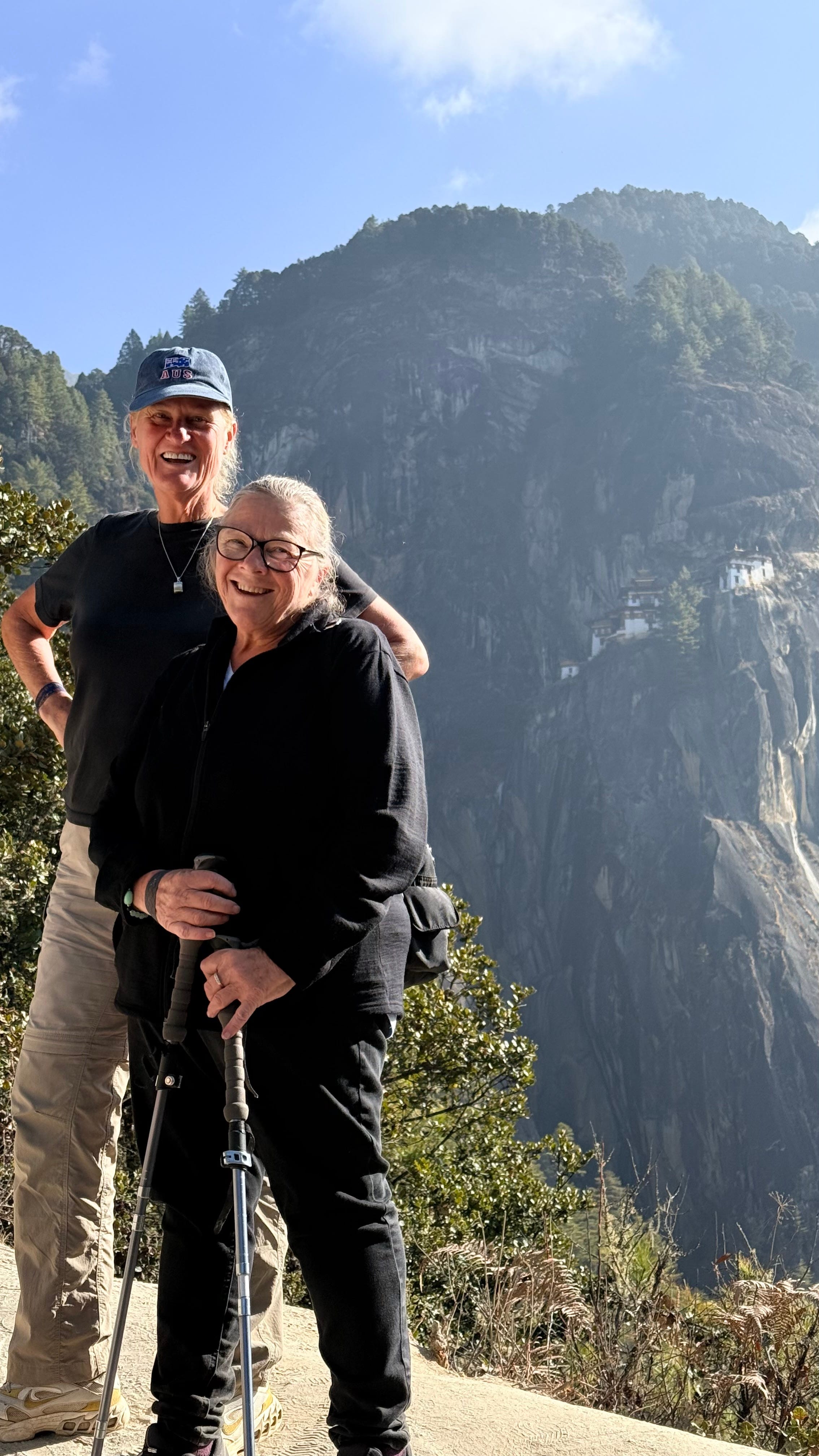
The incline is reasonable, after 2.5 hours we reach a cafe with a direct view of the tigers nest. It’s a wonderful reprieve from the climb, an opportunity for coffee and something to eat whilst taking a rest. And admiring the view of this monument! The next part of the climb is to the viewpoint which sits almost directly opposite the tigers nest a great opportunity for photos! From here it’s 700 steps down and 400 steps up to reach the monastery. Ouch! What a climb. Reaching the monastery after around three and a half hours of hiking steadily upward it feels pretty good to have accomplished the climb and then to sit and admire this set of buildings. Built in 1692, it is one of thirteen Tigers nest caves in what was once Tibet, however this is the best known of the thirteen. In 1998, a fire broke out in the main temple, the king oversaw the restoration and it was fully restored to an exact replica by 2005. The sun heats up as we journey back down the mountain, its warm, I’m grateful for the early start, those climbing up look very hot and bothered. I honestly believe this monument could be part of the seven new wonders of the world. As it was a vote system I guess a population of under 800,000 it stood little chance against larger population places voting their own monuments into the seven.
So as Bhutan draws to an end but I’ll leave you with some fun facts and hope you get to visit this fabulous country
Population 797,000
Religion Buddhism
The worlds only carbon negative country
Any mountain over 6000m is forbidden to climb
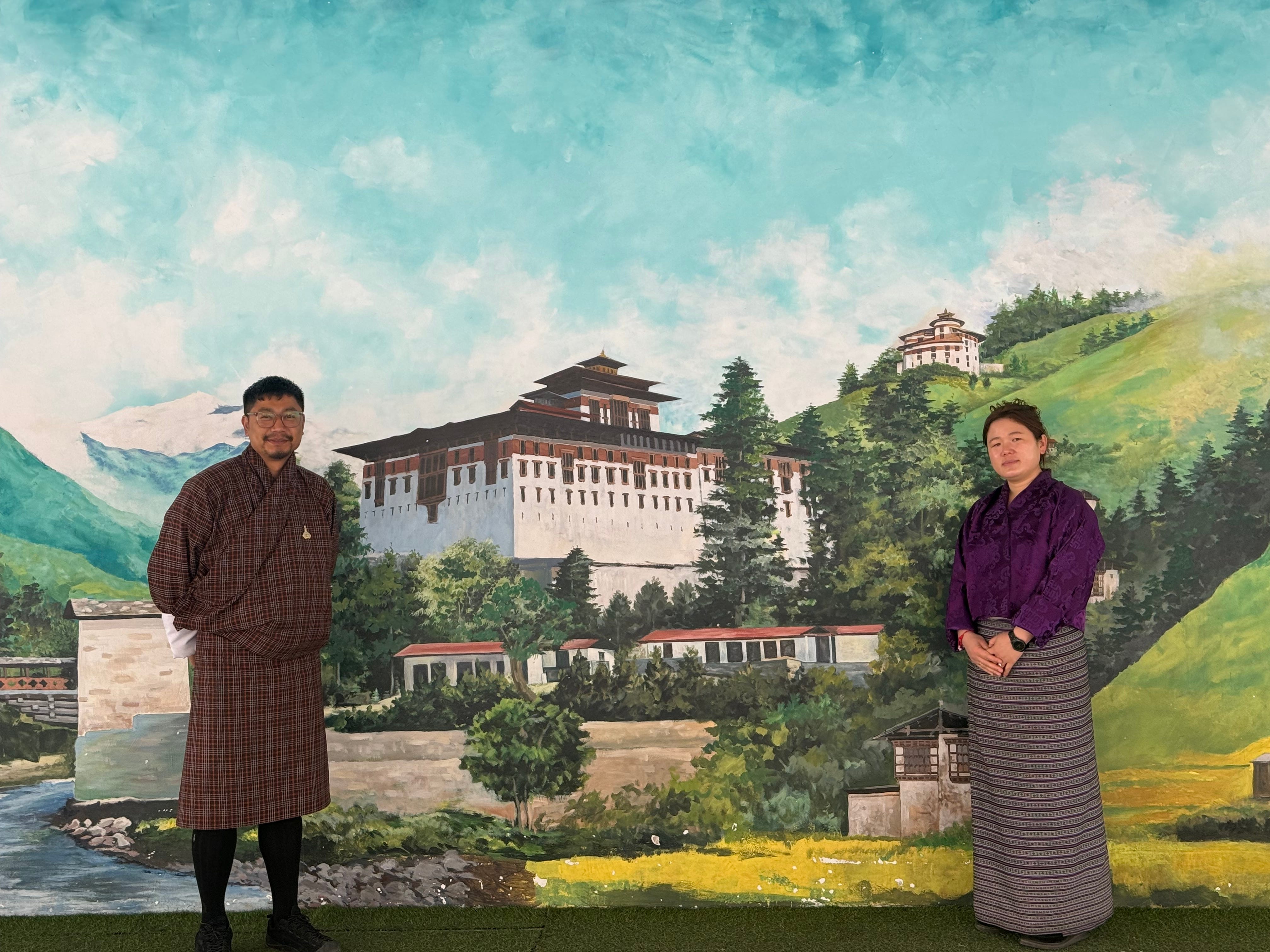
National dress is mandatory for citizens to wear - Gho for men, Kira for women
There are no traffic lights in Bhutan
Bhutan was the last country in the world to get TV - 1999
The sale and production of tobacco is illegal, smoking in public is banned
No killing rule, killing animals is generally prohibited and vegetarianism is widespread,
Amazing!!
Fantastic travelogue as usual, thanks for sharing. Continue to travel far & safely.